Kumrat at Risk of GLOF when Ministry of Climate Change Planning for COP29

Time is passing quickly, and with every tick of the clock, climate change is tightening its grip on Pakistan. The country lives under the shadow of climate change, facing constant threats. Some may believe that climate change is a myth or just about funding, but let’s talk about those funds. Can we fight extreme weather conditions without resources or money? No, we cannot. Without the necessary resources, we would surrender immediately, admitting we don’t have the strength or financial means to combat these challenges.
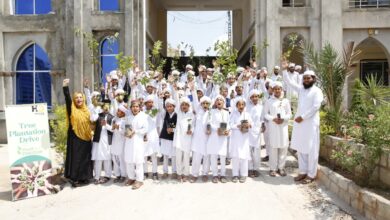
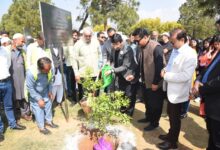
“Climate change” may seem like a small phrase, but its effects are incredibly dangerous. Just look at how the weather patterns have changed. September passed like a tormentor—there was no evening coolness, and temperatures remained high. Even at the end of September, the temperature in Islamabad, the capital, was recorded at 37°C, making it extremely difficult to get through the day. October has now begun, but it’s nothing like the weather from years ago when this month used to bring some relief. Tree plantations are being carried out to combat the rising temperatures; I covered several of these events in August and September. However, these trees will take time to grow, and by the time they mature, climate change will have already taken its toll.
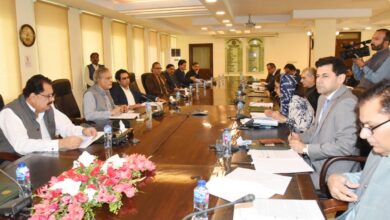
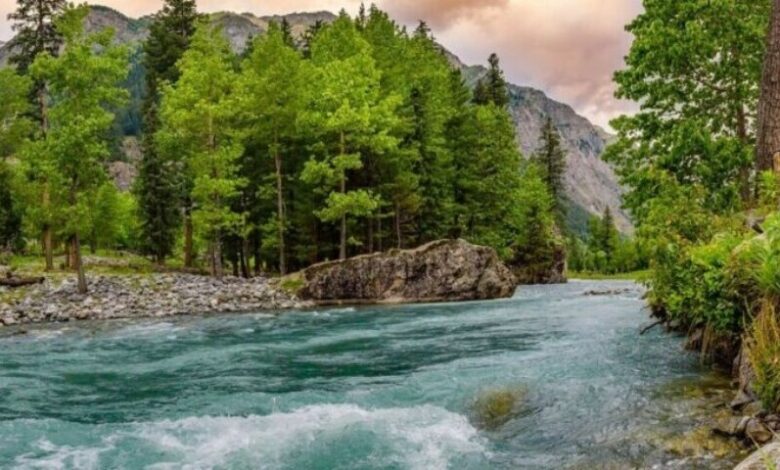
Today, my concern about climate change grew further when Sahibzada Sibghatullah informed the National Assembly Standing Committee on Climate Change about the looming risk of a glacial lake outburst in Kumrat, Khyber Pakhtunkhwa. Two glacial lakes in Chitral are also at risk of bursting, posing a serious threat to local populations. Why might these lakes burst? Because the glaciers are rapidly melting due to rising temperatures. Sahibzada Sibghatullah also mentioned that the once-clear waters of Kumrat have now turned into floodwaters due to a glacial incident that occurred a month ago, drastically altering the condition of Kumrat’s waters.
I remember visiting Kumrat in 2020—it was a place of breathtaking beauty, with clean water and fresh air. Spending time in those serene surroundings was wonderful. The evenings were pleasantly cool, and the sound of the river made the nights even more enchanting. I spoke with local residents who described Kumrat as a gift from nature, providing them with peace and a life close to their hearts. Everything they said was true. My friends and I sat by the river, enjoying the tranquility. Now, when I hear that Kumrat’s waters have turned murky and become floodwaters, the beautiful scene I remember flashes before my eyes.
Authorities should not wait for the lake to burst; they need to take preventive measures now. A notification regarding the risk of a glacial lake outburst in Laspur has already been issued by the Assistant Commissioner, Sub-Divisional Magistrate, and PDMA. Instructions have been given to hotel owners and locals to follow safety precautions, and residents near the Panjgorha River have been advised to avoid going near the river. Neglecting safety can lead to great losses, so it’s crucial to act promptly.
Given the concerns surrounding Kumrat, I decided to contact NDMA for information. Their National Emergency Operations Center (NEOC) has been quite active this year. Upon reaching out to NDMA, I learned that their technical team from NEOC conducted a detailed assessment in Upper Dir regarding the Laspur Glacier. They identified three lakes that are close to each other and at risk of bursting. According to technical analysis, the size and volume of these lakes have increased in recent years, and a dedicated team at NEOC is closely monitoring the situation. The formation and expansion of these lakes are attributed to climate change and rising summer temperatures. However, with temperatures now starting to drop and snowfall expected in the coming winter, the risk of the lakes bursting is minimal. Nonetheless, the team will continue to monitor the situation closely, as there is a potential for the lakes to burst in the summer of 2025.
Since the beginning of summer, both the Meteorological Department and NDMA have been raising alarms about GLOFs (Glacial Lake Outburst Floods). The Meteorological Department has repeatedly issued alerts. My concern is that if the temperature has been so high this year, what will happen next year?
The Ministry of Climate Change has decided to bring the issue of melting glaciers to COP29. Additional Secretary for Climate Change, Ayesha Humaira, briefed the standing committee on preparations for COP29, which will be held in Baku, Azerbaijan, this year. She outlined the entire plan for Pakistan’s participation.
In her briefing, Ayesha Humaira mentioned that work is being done in three streams for COP29. Pakistan will set up a pavilion to showcase its work, highlighting its climate challenges and solutions. Three teams have been formed to work on this, and Humaira herself is monitoring everything daily. COP29 will feature three events each day during the week, where Pakistan will present its climate challenges to the world, with a special focus on glaciers. She also stated that the issue of climate justice will be introduced at COP29, and they have involved the Supreme Court in this process, aiming to take judges to COP29 to discuss necessary legislation and how climate justice should be pursued. Another key topic for Pakistan is climate finance, which will also be a focus during the events. Since women and children are the most affected by climate change, the ministry is actively engaging women in their efforts.
While this is the government’s plan for COP29, everyone is eager to see what progress has been made in addressing the immediate issues of glaciers and rising temperatures in affected areas. Chairperson of the standing committee, Munazza Hassan, has requested a report on the matter in the next meeting and has summoned the relevant authorities.
—
Let me know if you need any further adjustments!