Annalena Baerbock to Make History as First European Woman to Lead UN General Assembly
Germany’s foreign minister steps into the role amid calls for reform, inclusivity, and gender equality

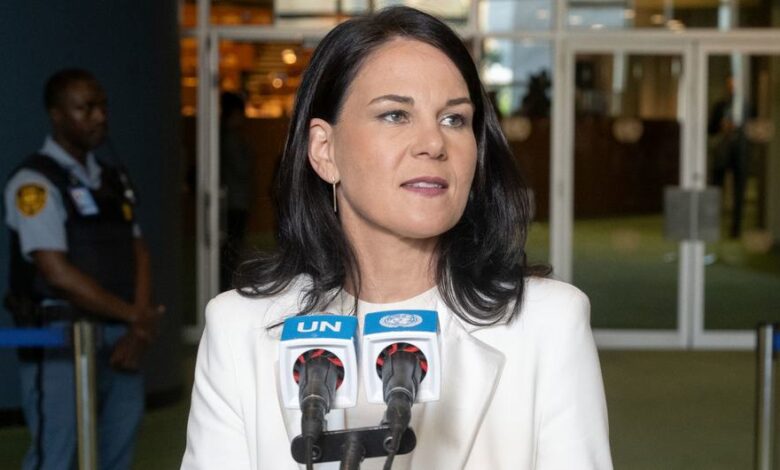
On Tuesday, Annalena Baerbock will take office as President of the United Nations General Assembly, becoming the first European woman and only the fifth female leader in the Assembly’s history. Her appointment comes at a critical time, with the UN facing financial hurdles, structural reform, and growing demands for inclusivity in decision-making.
María Fernanda Espinosa, who presided over the Assembly from 2018 to 2019 as the first woman from Latin America and the Caribbean to hold the post, praised Baerbock’s diplomatic skills and leadership qualities. She described the General Assembly as “the laboratory of international law” and noted that its presidency requires tireless work, fair negotiation, and strong diplomacy. Espinosa said Baerbock has all the qualities to deliver a “brilliant performance,” especially as she takes charge during what she called a “profound structural change” within the institution.
Among Baerbock’s priorities will be overseeing reforms under the UN80 process and advancing commitments from the Pact for the Future, adopted in 2024. Espinosa emphasized the importance of these tasks, stating that the UN is an irreplaceable institution that must continually adapt to new global realities.
Reflecting on the future, Espinosa also raised a question that has echoed within diplomatic circles for years: “Why not a woman as Secretary-General?” With the next appointment scheduled for 2026, she argued that the time is right to consider female leadership at the UN’s highest level. A woman Secretary-General, she suggested, could bring bridge-building, strong management, and what she termed “historic justice” after eight decades of exclusively male leadership.
Espinosa highlighted one of the UN’s greatest challenges: the gap between resolutions passed in the Assembly and their actual implementation at the national level. She called for more “inclusive and networked multilateralism,” where citizens are informed, engaged, and able to monitor international decisions.
While much of the work of the presidency happens behind the scenes, Baerbock will face critical responsibilities tied to peace, security, and sustainable development. Espinosa recalled that the Assembly’s very first resolution dealt with atomic energy, highlighting how the body has always been tasked with navigating new global forces that hold both potential and risk.
Looking back at her own presidency, Espinosa shared her pride in moments like the adoption of the Global Compact for Migration in 2018 and the UN’s decision to phase out single-use plastics. Both were milestones that reflected the Assembly’s ability to negotiate difficult agreements and take meaningful steps toward sustainability.
Baerbock’s presidency now opens a new chapter. Her leadership will be tested in addressing global divides, strengthening multilateralism, and steering reforms that can restore trust in the UN. More than a historic milestone for women in diplomacy, her appointment is a chance to prove that new leadership styles can reshape international cooperation for the future