
Aga Khan University Launches PRISMA 3.0 to Transform Maternal Health Research
USD 10 Million Gates Foundation Grant Supports Longitudinal Study Tracking Women’s Health Beyond Childbirth

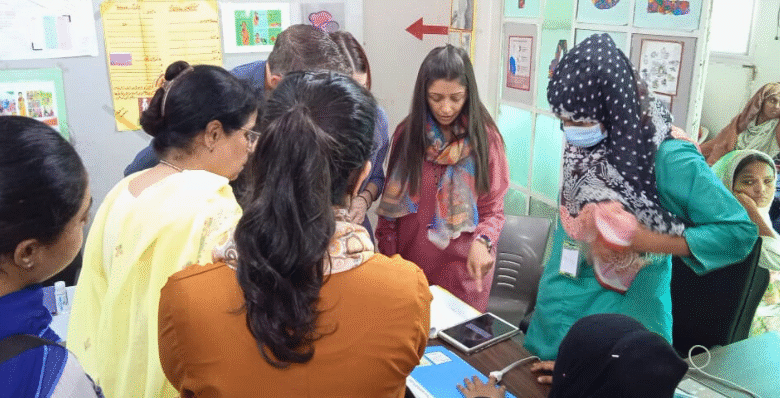
KARACHI: “In our societies, when we think of a woman, it starts and ends with the uterus,” says Dr Zahra Hoodbhoy, Associate Professor and Principal Investigator for the Pregnancy Risk, Infant Surveillance and Measurement Alliance (PRISMA). “As long as she’s pregnant, she’s the focus of attention. The moment the baby is born, all attention shifts to the child. But what happens to the woman afterward—her physical, emotional, and social health—remains largely invisible.”
PRISMA 3.0 aims to change this imbalance. Supported by a USD 10 million grant from the Gates Foundation, the Aga Khan University (AKU) team in Pakistan is leading one of the most comprehensive studies of maternal and child health in the developing world. The project brings together Dr Hoodbhoy, Professor Fyezah Jehan, and Associate Professor Imran Nisar, who collectively have decades of experience in maternal and newborn health research.
The study will enroll over 6,000 women in Pakistan, forming part of a 16,000-participant cohort across India and Kenya. Researchers will track biological, social, and environmental factors from pregnancy to five years after birth through approximately 20 structured check-ins. Clinical, psychosocial, and environmental data will be collected to help health systems better address maternal care beyond childbirth.
Building on earlier PRISMA phases—which revealed gaps in understanding anemia, depression, and gestational diabetes—the new phase introduces cutting-edge innovations. Artificial intelligence will analyze ultrasound, placental, and C-section incision images to predict complications, estimate gestational age, identify placental anomalies, and assess the risk of C-section wound infections.
Clinical data will also be linked with climate records on heat and air quality to evaluate environmental risks to mothers and infants. For the first time, the study will include non-pregnant women to examine previously neglected areas such as heavy menstrual bleeding, sexually transmitted infections, and infertility.
“This grant allows us to complete the continuum of impact—from understanding women’s health in pregnancy to addressing their long-term well-being,” said Dr Salim Virani, Vice Provost, Research at AKU. “Projects like PRISMA reflect the University’s commitment to research that not only advances knowledge but directly benefits the communities we serve.”
Dr Hoodbhoy stresses that PRISMA is as much about systems change as it is about science. “Only when we measure the real burden of disease with better tools can we convince policymakers to invest,” she said. “By following women through every stage of their reproductive journey and beyond, we hope to generate evidence that translates into action—and gives every woman the care and attention she deserves.”