Guila Clara Kessous Calls for Women’s Quotas in Peace Talks
UNESCO Artist for Peace urges global action to include more women in negotiations, saying peace lasts longer when women lead.

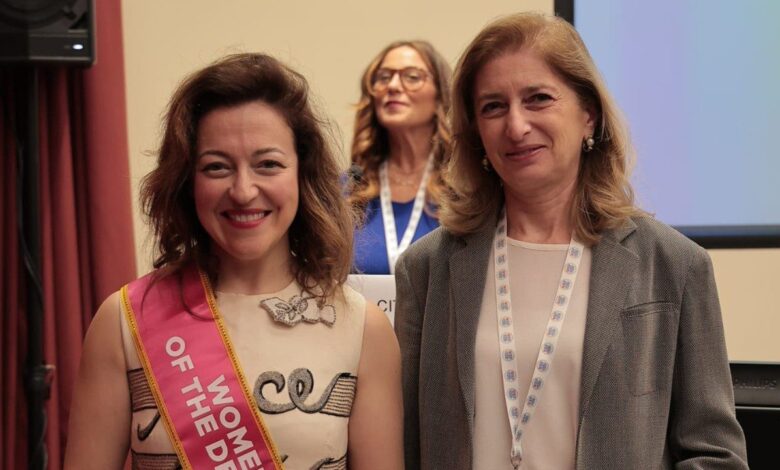
Guila Clara Kessous, a UNESCO Artist for Peace, social entrepreneur, and executive coach, is leading a global call for women to have a stronger voice in peace negotiations. Speaking to Vatican News after receiving the “Woman of the Decade Award” from the Women Economic Forum in Palermo, Italy, she emphasized that peace built without women’s participation often fails to endure.
Her recent proposal at the United Nations Geneva Peace Talks on September 10 aims to introduce a resolution that would require at least 30% of peace negotiation delegations to include women. “Women are being pushed away from decisions about peace-making, while they are the first victims of conflicts,” Kessous said. She pointed out that when women are involved, peace agreements are 35% more likely to last.
The resolution not only focuses on representation but also outlines practical steps to empower women in peace-building. These include monitoring mechanisms to measure the impact of women’s participation, as well as specialized training programs that prepare women to negotiate effectively. Kessous hopes to present this proposal officially at the 61st session of the UN Human Rights Council in early 2026.
For her, the issue goes beyond policy—it’s a moral and human necessity. “When a woman negotiates, she thinks about life. She knows what it means to lose a brother, husband, or son in war. The value of life is so much more powerful than egos or victory,” she said. Kessous believes that conflicts today are often driven by pride and the desire to dominate, while women’s perspectives can bring empathy, collaboration, and a focus on preserving life.
She adds that peacebuilding is an active process requiring respect, interdependence, and a shared sense of humanity. “If there is no respect for the other, there will always be distrust and revenge. I hope that a feminine voice can truly make the difference when it comes to negotiation.”
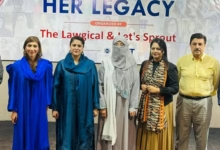
Receiving the “Woman of the Decade Award” was deeply meaningful for Kessous. The event, attended by global figures such as Tunisian Nobel Peace Prize laureate Ouided Bouchamaoui and Syrian Minister Hindi Kabawat, celebrated her dedication to inclusive diplomacy. She used the platform to highlight her concept of “diplomatic entrepreneurship,” a broader vision of diplomacy that goes beyond political arenas to include culture, business, art, and even sports.
“I’m coming from the civil world, and I have my word to say about making peace,” she said. “Diplomacy isn’t only for political elites; it’s for everyone who believes in the value of life.”
As a UNESCO Artist for Peace, Kessous uses art as a bridge between nations. At the award ceremony, she wore “The Peace Dress” by Valentino, originally designed during the Gulf War in 1991 as a symbol of hope. “Fashion has a responsibility to transmit ideas of pacifism to younger generations,” she explained. Through art diplomacy, she envisions people from opposing sides connecting through creativity and shared expression.
“It’s a universal language,” she said. “It transcends the idea of hate and instead says, ‘We can be in touch, we can create together.’”
Kessous’ message is simple but urgent: women must not only be present in peace processes—they must be empowered to lead them. Because when women are at the table, peace isn’t just signed; it’s sustained.