UN Deputy Chief Calls for Renewed Global Action on Gender Equality at Global Leaders’ Meeting
Amina Mohammed urges world leaders to reignite the 1995 Beijing Declaration’s vision and make gender equality central to global progress.

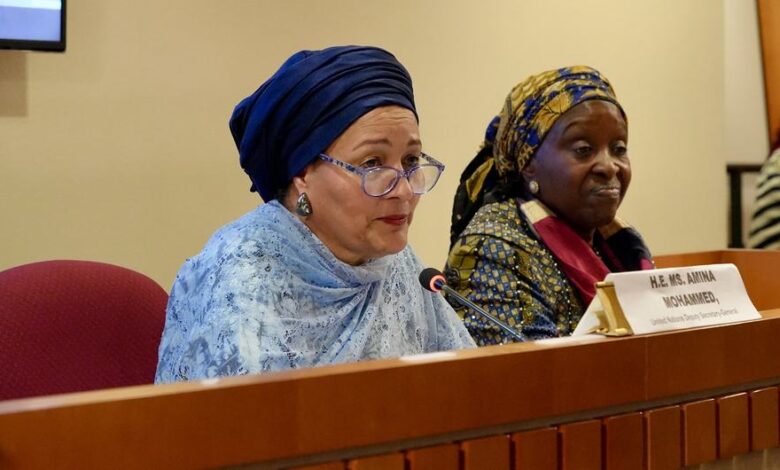
At the Global Leaders’ Meeting on Women, co-hosted by China and UN Women, United Nations Deputy Secretary-General Amina Mohammed called on the international community to renew its commitment to gender equality and women’s empowerment. The event sought to revive the spirit of the 1995 Fourth World Conference on Women in Beijing, which produced the landmark Beijing Declaration — a global roadmap for achieving women’s rights and gender equality.
Ms. Mohammed reminded world leaders that “women’s rights are human rights,” and praised the Declaration for lighting “the path to progress.” She thanked China for hosting the event and commended nations that have continued to uphold the Declaration’s values over the decades.
Despite progress since 1995, she highlighted that change has been painfully slow. Citing a recent UN Department of Economic and Social Affairs (DESA) report, she noted that none of the global gender equality targets are currently on track. The report revealed that 708 million women remain excluded from the workforce due to unpaid care responsibilities, while 351 million women and girls risk falling into extreme poverty by 2030.
“The hour is late,” Ms. Mohammed warned. “We are running out of time to make good on the promise we made three decades ago.” With just five years remaining until the 2030 Sustainable Development Goals (SDGs) deadline, she urged world leaders to take bold and immediate action.
She emphasized that the Beijing Declaration remains as relevant today as it was three decades ago. It continues to influence major UN frameworks, including the 2030 Agenda for Sustainable Development and the recently adopted Pact for the Future. Ms. Mohammed stressed that true national progress depends on making women’s empowerment a core element of all policies, budgets, and development plans.
“In every negotiating room, in every budget we draft, and every policy we design, gender equality must be our organizing principle,” she declared.
The deputy UN chief also drew attention to the economic benefits of empowering women and girls. According to UN research, providing women with access to quality education and digital skills could lift 30 million people out of extreme poverty and boost the global economy by $1.5 trillion within just five years.
Concluding her address, Ms. Mohammed underscored the importance of increasing women’s participation in leadership and decision-making roles. “We have the evidence that where women lead, we see more durable peace, more profitable businesses, and more inclusive policies,” she affirmed.
Her message served as both a reminder and a rallying call — that true gender equality is not just a moral obligation, but also an economic and social necessity for building a sustainable and inclusive world.