Indonesia’s “Brave Pink” Protesters March Against Police Abuses and Political Perks
Women’s alliance leads sweeping demonstrations demanding reform and accountability amid rising unrest

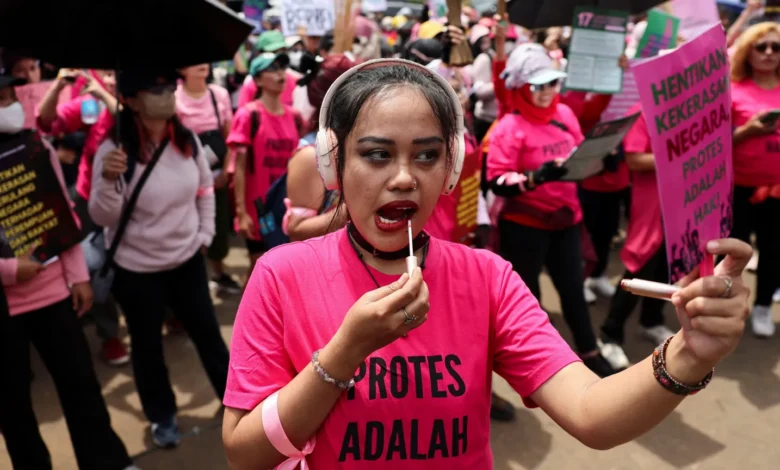
Hundreds of women dressed in pink and carrying broomsticks took to the streets of Jakarta on Wednesday, joining a wave of protests that have rocked Indonesia for more than two weeks. The demonstrators, part of the Indonesian Women’s Alliance (IWA), said their broomsticks symbolised a demand to “sweep away the dirt of the state, militarism and police repression.” Anger has mounted over police brutality, rising living costs, and lavish benefits for lawmakers, with rallies intensifying after the death of motorcycle taxi driver Affan Kurniawan, who was run over by a police vehicle.
President Prabowo Subianto, who initially announced he would cancel his trip to Beijing to manage the crisis, was later seen alongside Xi Jinping and Vladimir Putin at China’s military parade. Earlier, Prabowo pledged to roll back perks for politicians, but protesters argue that the move does not address deeper concerns about inequality, governance, and accountability.
The demonstrations have turned deadly, with at least 10 people killed since late August—some allegedly due to police violence—and over 1,000 injured, according to the Indonesian Legal Aid Foundation. The UN human rights office has urged transparent investigations, while Amnesty International Indonesia called on the government to meet protesters’ demands before more lives are lost.
The IWA, which unites 90 women’s organisations along with unions and civil society groups, emphasised that their use of pink represents bravery, echoing women’s historic role in pushing back against authoritarianism, including the downfall of Suharto in 1998. Other demonstrators wore green, the colour of Affan’s rideshare uniform, creating what online activists call “hero green” and “brave pink” solidarity movements.
National Human Rights Commission chairperson Anis Hidayah described the situation as “worrying,” citing limited avenues for citizens to voice grievances without repression. Protest leaders and activists stress that symbolic gestures such as cutting allowances for MPs will not suffice. They are calling for systemic reforms in agriculture, education, economic equity, and policing.
“The ultimate goal,” said Herianto, a former student union leader, “is to push for more accountable, transparent, and people-centred governance.” For now, the protests show no sign of slowing, with women at the forefront demanding change through resilience, symbolism, and solidarity.