Young Woman’s Boutique in KP Sparks Rural Empowerment
In conservative Pabbi Bazar, Sumbal Riaz defies norms to launch a boutique, symbolizing women’s growing role in Pakistan’s economic progress

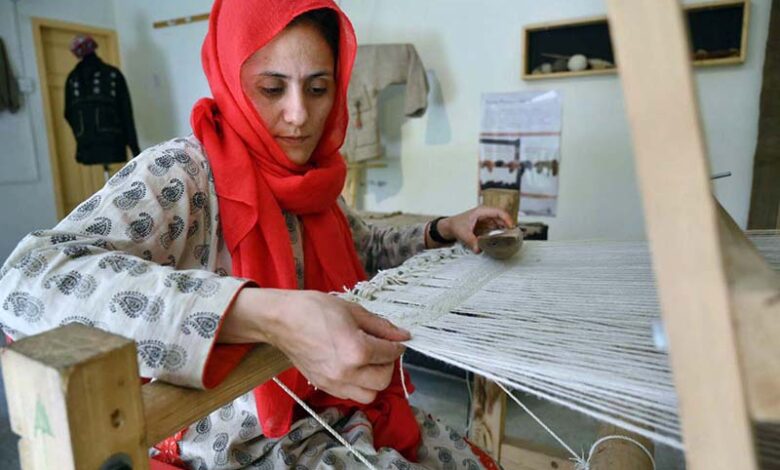
In a narrow alley of Pabbi Bazar, nestled in Khyber Pakhtunkhwa’s Nowshera district, a quiet revolution is taking place. It’s not marked by rallies or speeches — but by fabric, thread, and the sound of determination. Here, 28-year-old Sumbal Riaz has become a local symbol of resilience and empowerment by launching a boutique that is not just sustaining her family but also redefining women’s role in Pakistan’s economy.
Sumbal, a postgraduate in economics from the University of Peshawar, once dreamed of government service or pursuing education abroad. But life had other plans. When her father suffered a sudden heart attack in 2020, her world turned upside down. “He needed urgent surgery, and we had no financial backup,” she recalls. “My mother sold her jewelry to help me launch the boutique. That one act changed everything.”
In a region where women’s mobility and participation in business are often restricted by social taboos, Sumbal’s boutique is not just a commercial venture — it’s a statement. Employing two tailors and catering to a growing customer base, she now plans to open a second outlet on University Road in Peshawar. “This is more than income — it’s about dignity, contribution, and independence,” she says.
Sumbal’s story is part of a wider transformation slowly unfolding across Pakistan. Women — nearly half the population — are increasingly stepping into roles in business, technology, and the creative sectors, despite facing cultural barriers, limited access to finance, and lack of infrastructure.
According to Professor Dr. Zilakat Malik, former Chairman of the Economics Department at the University of Peshawar, “Women entrepreneurship is key to national growth. Financial institutions must ease credit access for women-led businesses, especially in underserved rural and semi-urban areas like Pabbi.”
He points to government-led initiatives like Uraan Pakistan, a five-year reform plan spearheaded by Prime Minister Shehbaz Sharif, which puts youth and women empowerment at the center of economic renewal. “The plan’s focus on e-commerce, exports, and sustainability means women can lead in both traditional and digital markets,” Dr. Malik adds.
Programs under Uraan aim to narrow the rural-urban divide by promoting healthcare, technical training, and grassroots enterprise. However, challenges persist — especially in Khyber Pakhtunkhwa’s tribal and remote districts, where inadequate roads, schools, and internet facilities continue to restrict women’s participation.
To address these gaps, the Small and Medium Enterprises Development Authority (SMEDA), in collaboration with Japan International Cooperation Agency (JICA), has launched the “Women Entrepreneurs Booster Package.” Spanning 2026–2030, the program aims to support women in the informal economy through capacity building, mentorship, and formal market integration.
“This partnership will accelerate women’s entry into structured economic systems,” says a SMEDA spokesperson. “It’s about creating real, lasting livelihoods.”
In parallel, the Prime Minister’s Youth Program has launched initiatives like 2,000 engineering internships, scholarship funds, and laptop distribution — with a strong push for female participation. Former TEVTA KP MD, Engr. Sajjad Khan, confirms over Rs. 1 billion has been invested in technical training across districts like Torghar and Kolai Palas, including partnerships with 32 private institutions.
There’s also cultural progress underway. A new sub-campus of the National College of Arts in Peshawar will allow women to train in design, architecture, and fine arts — fields traditionally dominated by men. Policies offering maternity leave, flexible work hours, and interest-free loans further encourage working women.
But experts caution that policy is not enough. “We need a cultural shift,” says Dr. Malik. “Women should be seen not just as economic contributors but as leaders and decision-makers.”
That’s what makes role models like Sumbal Riaz so vital. Her boutique may be modest in scale, but its impact is massive. She’s proven that even in the most conservative spaces, when women are given opportunity and support, they can drive real change.
“Entrepreneurship is not just business,” Sumbal says with quiet pride. “It’s freedom. It’s how I support my family and inspire other women around me.”
From the heart of Pabbi to the policy corridors of Islamabad, Pakistan’s economic future depends on how it empowers its women. And thanks to pioneers like Sumbal, that future looks brighter with every stitch.