Kashish Chaudhary Makes History as Balochistan’s First Hindu Woman Assistant Commissioner
At 25, Kashish Chaudhary becomes the first female from the Hindu minority in Balochistan to clear the BPSC exam and be appointed Assistant Commissioner, setting a powerful example of inclusion and perseverance.

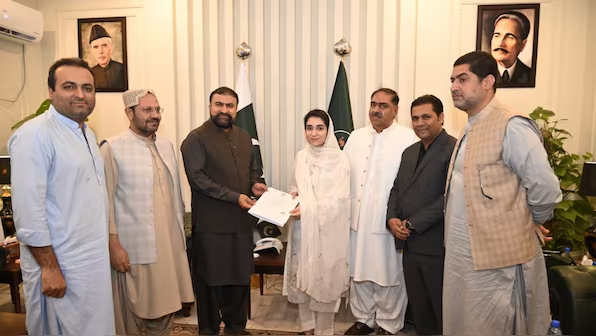
QUETTA: In a landmark moment for Balochistan and Pakistan’s minority communities, 25-year-old Kashish Chaudhary has become the first Hindu woman to be appointed as an Assistant Commissioner in Balochistan. This historic achievement breaks both gender and religious barriers in a province often defined by its complex socio-political dynamics.
Kashish hails from Noshki, a remote town in the Chagai district. Her success comes after she passed the Balochistan Public Service Commission (BPSC) exam—an accomplishment that showcases her dedication, hard work, and resilience.
On Monday, she visited Quetta with her father, Girdhari Lal, to meet Balochistan Chief Minister Sarfaraz Bugti, who personally congratulated her on her appointment. The meeting symbolized more than just a formality—it was recognition of a bold stride towards inclusivity in governance.
Her appointment is being hailed as a major step forward not only for Hindu representation in Pakistan’s civil services but also for young women in Balochistan, especially those from underserved regions and marginalized backgrounds.
Kashish’s journey is significant in a country where minority communities often struggle for visibility and opportunities. Her success signals the opening of doors for many others who previously saw such ambitions as out of reach due to social and systemic constraints.
In recent years, Pakistan has seen a slow but growing number of minority community members entering professional and civil service sectors. Yet, few have reached leadership positions, particularly in provinces like Balochistan. Kashish’s achievement stands out not just for the title she’s earned, but for the deep-rooted change it represents.
Her journey is also a powerful reminder of what is possible when merit and equal opportunity are prioritized. By excelling through the same competitive examination system as her peers, Kashish has proven that talent knows no religious or regional boundaries.
Chief Minister Sarfaraz Bugti praised her determination and noted that her appointment reflects the government’s vision of inclusive governance. He also emphasized the importance of encouraging more women, especially from minority and rural communities, to pursue careers in public service.
For many girls across Balochistan and beyond, Kashish has become a role model—a symbol of hope, representation, and progress. Her journey reflects the importance of education, equal opportunity, and societal support in helping individuals from all backgrounds succeed.
Kashish Chaudhary’s story is more than just a personal milestone—it’s a national moment of pride and reflection. In a region often marred by instability and inequality, her rise offers a new narrative: one of possibility, inclusion, and change.
As Pakistan continues to grapple with questions of identity, rights, and representation, young women like Kashish are shaping a future that is more diverse, just, and empowered.