The Struggle of Afghan Women’s Education: A Dream Deferred
The abrupt termination of the U.S. government-funded scholarship program leaves Afghan women like R.K. stranded, threatening their dreams of education and a better future amidst oppressive Taliban policies.

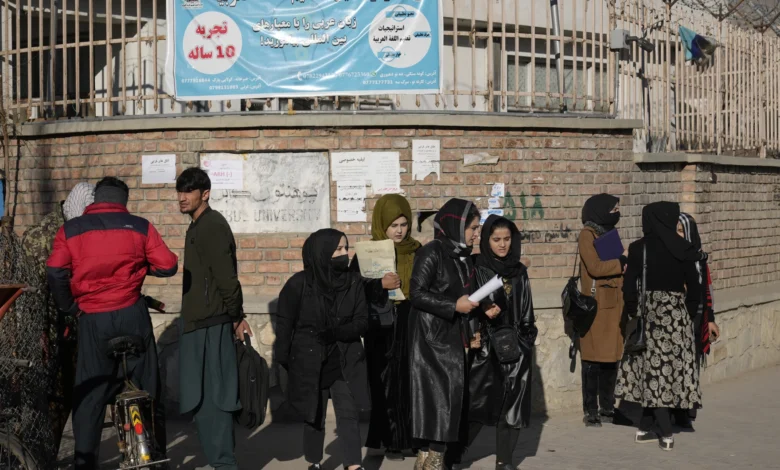
In Afghanistan, the doors to education for women have been slammed shut. Since the Taliban’s return to power in 2021, girls have been prohibited from attending high school and universities. This has left many young women with their dreams crushed and futures uncertain. However, amidst these challenges, a glimmer of hope arose through online learning programs funded by the U.S. Agency for International Development (USAID). For women like R.K., this opportunity was not just a chance for an education but a lifeline in the darkest of times. Yet, as political shifts loom, this lifeline may soon be severed, leaving countless young women in limbo.
A Ray of Hope Amidst Darkness
R.K. is one of the 208 women who received scholarships through USAID’s Women’s Scholarship Endowment (WSE) program. The program, which started in 2018, was designed to provide education to Afghan women, particularly in the STEM fields, through online learning at the American University of Afghanistan (AUAF). For women like R.K., who had no chance of pursuing a traditional university degree in their own country, this scholarship provided an invaluable opportunity to continue their education despite the severe restrictions imposed by the Taliban.
For a while, it seemed like a bright future was within reach. R.K. had already completed nearly half of the required credits for her degree and was hopeful that by 2026, she would graduate with a degree in hand. The scholarship allowed her to study from home, providing the flexibility and safety she needed while defying the Taliban’s oppressive policies.
Uncertainty and Fear of the Future
However, this lifeline is now at risk. In April 2024, USAID announced that it would be terminating the scholarship program due to shifting priorities. This announcement has sent shockwaves through the cohort of young women who had pinned their hopes on this scholarship. R.K. and her peers are now left in a state of uncertainty, unsure whether they will be able to complete their studies or if their academic dreams will be shattered.
The decision has left many asking why the U.S. government would cut off such a critical program, especially given the dire situation women face in Afghanistan. Critics argue that the suspension of these scholarships removes one of the few remaining pathways for Afghan women to receive higher education. Human rights organizations have expressed their dismay, calling it a grave injustice to the women who have fought so hard to pursue their dreams.
A Unique and Valuable Program
The scholarship program itself had an unusual history. In 2018, USAID granted $50 million to the Texas A&M University Foundation to establish the Women’s Scholarship Endowment (WSE). The endowment was a unique move by USAID, as it was designed to run purely on the interest generated from the initial investment. The funds provided scholarships for women in Afghanistan to study at AUAF and other institutions abroad, including those who were able to relocate to Qatar and Oman to attend in-person classes. The program also offered online courses for students who could not leave Afghanistan, which was crucial in the wake of the Taliban’s takeover.
Despite this innovative model, the future of the program is now in jeopardy. With no clear answers from USAID or the U.S. State Department, R.K. and her peers are left wondering if their hard work will amount to anything. The uncertainty surrounding the program’s future has led to anxiety among students, who are concerned that their credits may not be recognized by other universities if the program is abruptly cut short.
A Global Responsibility
The situation for Afghan women is dire. After the Taliban’s return to power, girls were banned from secondary and higher education, and many young women were left with limited opportunities. Programs like the WSE were among the few avenues for these women to continue their education. By terminating this program, the U.S. government is effectively cutting off one of the last remaining opportunities for women to access higher education.
The decision has sparked a global conversation about the need to support education for women and girls in conflict zones. As organizations like Human Rights Watch have pointed out, this scholarship program was not just a chance for individual women to pursue their dreams but a beacon of hope for all Afghan girls who have been denied an education. These programs should not be taken away, especially at a time when the need for education for Afghan women is more urgent than ever.
The Way Forward
As we wait for clarity on the fate of the WSE program, it’s important to remember the value of education for women. The education of women is not just an individual right; it’s a powerful tool for social and economic progress. It benefits entire communities, families, and societies. For women like R.K., losing this opportunity means not only the loss of their dreams but also the erasure of a future that could change the course of their lives and those around them.
The world must do more to ensure that Afghan women have access to the education they deserve. Whether through continued funding for scholarship programs like WSE or other initiatives, we must stand by these women and help them build the future they deserve. After all, in a world where hope is in short supply, education remains one of the few things that can light the way forward.