
There is a NEW government taking control. Like other new governments, it will attempt to craft policies and initiatives that live up to the promises made to supporters in its manifesto.
The formation of such policies will be more contentious due to the underlying problem with coalitions. However, given Pakistan’s current polycrisis, officials will need to handle both the economic and the concerns of the populace at the same time. Finding the areas where gaps are most noticeable and demonstrating early accomplishments by addressing low-hanging fruit in the near future are two ways to do this.
According to a new World Economic Forum (WEF) report titled Closing the Women’s Health Gap, “investments addressing the women’s health gap could add years to life and life to years— and potentially boost the global economy by $1 trillion annually by 2040.” This explores the reasons behind the health disparities between men and women, which is a crucial addition to the body of study on the subject worldwide.
Four primary causes of the global health disparity between men and women are identified in the paper. Remarkably, when it comes to scientific study on important health issues, patriarchal bias is reflected in three of the four causes: science, data, and investment. The most evident one is when the treatment of diseases uses the male body as the “norm,” meaning that the various impacts on women’s bodies are ignored.
The absence of data disaggregation and the paucity of research focusing on women (particularly for conditions like diabetes, asthma, and coronary heart disease that impact both genders differently) are the two main causes of the data problem. One result of the aforementioned is the issue of reduced funding for medications and treatments that are especially tailored to women’s needs or that expressly address a health disparity that affects them.
Pakistan has not succeeded in removing the obstacles to care listed in a WEF report.
There are many examples. The Economist just published a story about the development of a medication for endometriosis, a painful and crippling gynecological disorder that affects one in ten women globally. In 1690, the first endometriosis case was discovered. This is in contrast to years of study and financial commitment in a medication that targets male libido dysfunction and pleasure creation rather than any serious illness. Say no more.
“Barriers to care” refers to the range of health access factors, starting from the awareness of a health issue and continuing through preventive health information and communication, to contacting services for a prompt and accurate diagnosis that leads to an efficient and reasonably priced treatment and follow-up.
The most basic and affordable kind of care is related to girls’ and women’s access to health information, which may be critical to their overall quality of life both now and in the future. For instance, how to prevent diarrhea and other water-borne illnesses, the need of immunization for improved health, menstrual education, family planning, and healthy nutrition. But having access to knowledge is only the first step; you also need to have access to high-quality medical facilities, services, and supplies.
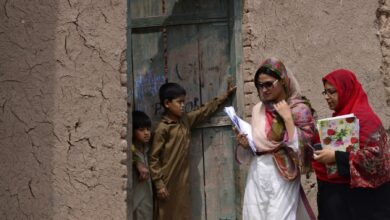
In the late 1980s, Pakistani authorities realized that rather than waiting for women to travel frequently large distances over difficult terrain to access a basic health unit, outreach to women in communities across the nation needed to be flexible and movable, reaching within families. Experts on Benazir Bhutto’s team developed a community health outreach program as part of her package of social reforms, which employed a group of community workers to provide basic health services and such information to households.
Girls from the area who completed middle or secondary school received training and basic medications with the intention of working in their community and visiting homes to assist women and children in obtaining better treatment and health information. The Prime Minister’s National Programme for Family Planning and Primary Health Care was introduced by the government in 1994, and it quickly earned the lovable moniker Lady Health Worker (LHW) Programme.
Thirty years later, Pakistan in particular has not succeeded in removing the fundamental obstacles to care that the WEF report lists. Premenstrual syndrome and menopause rank as the top two conditions, impacting GDP by a combined $120 billion, according to the authors’ evaluation of the top 10 conditions that affect worldwide GDP.
These figures are remarkable. The analysis suggests that conditions commonly referred to as “women’s issues,” on the grounds that they do not qualify as legitimate illnesses or diseases, are actually costing every economy millions, if not more. A return on investment analysis is conducted in the paper to demonstrate how funding women’s healthcare enhances both their quality of life and their capacity to support the economy. Their assessment assumes that overall benefit would exceed cost at a rate of about $2 returned to the economy for every $1 invested in low-income nations with insufficient basic health infrastructure.
Given the growing body of knowledge and data regarding women’s health and employment, Pakistan’s health policies and initiatives have attempted, but have not been able, to address the fundamentals. The objective of achieving universal health coverage must not change, but the essential foundations for doing so must be reevaluated and developed in light of both historical data and future projections.
The primary and preventive healthcare ecology remains unchanged, despite the existence of programs like the LHW Programme that are expressly designed to cater to women and children. What actions are necessary? Later on, more on this.
The author has worked on inclusive programs pertaining to public health, gender, and economic empowerment for more than 25 years. She presently works at a think tank in Islamabad.