
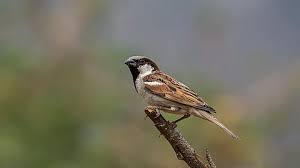
As soon as the first ray of morning appeared, the chirping of sparrows would be the first sound heard in the ears; the chirping of sparrows felt more beautiful than the alarm of a clock.
Raees Farogh wrote so beautifully:
- The chirping sparrow,
- fluttered its tiny little wings,
- the tiny drops of dew,
- made the faces of buds shine.
But this is now a thing of the past. Today, those mornings exist without the sweet voice of this incomparable bird. Its absence is deeply felt in the atmosphere of the morning. These beautiful mornings were ours when we were far from smartphones and Androids. Back then, there was neither the habit of staying up late at night nor any excuse to wake up late in the morning. Today, times have changed, because there is an excuse for sleeping late at night—time passes while watching reels on various social apps on smartphones, or hours go by watching a drama or a film. The result is the same: we are unable to wake up early in the morning.
Well, the discussion is about the sparrow. Now, when we don’t wake up early, meeting this delicate bird has also become impossible. But when this bird was not seen even during the day, the concern grew. Today, once again, the heart wished to listen to the sound of the sparrow. I wondered whether the situation from three years ago is still the same today, or perhaps even worse. So I thought, let’s once again gather information about this bird.
To prepare the report, I had to make a lot of efforts. The first thought that came to my mind was to contact the Islamabad Wildlife Management Board, but I received a rather blank response from there—that this is not their subject and they do not deal with it. Anyway, I had decided to make the report, so I continued my search, thinking that perhaps I could connect with someone who had some information.
Then I contacted Chief Wildlife Ranger Murree, Muhammad Abrar. He informed me that the sparrow population is declining by 3 to 5 percent every year, and so far 60 to 70 percent of the sparrow population has already disappeared. The main reasons for this are the excessive use of toxic pesticides on crops, rapid deforestation, and the hunting of sparrows.There is another serious issue as well, which has still not been completely eradicated: sparrows are captured, kept in cages, and then sold in the name of charity. During the process of capturing and caging them, many sparrows die, and there is no record of this with any institution. Moreover, people who are fond of eating sparrows are also responsible for their decline. Even today, in different areas of Punjab, there are famous hotels known for sparrow dishes, which must be banned.
To stop the killing of sparrows—those birds that chirp melodiously in the pleasant mornings filled with bright light—and to raise public awareness, this day also began to be observed in 2010. The purpose is to prevent the extinction of this tiny, beautiful bird, create awareness among the public, and make people understand that sparrows are meant to be loved and allowed to remain a part of our environment’s beauty.
I live in Islamabad. I felt the decline of sparrows, then my sister also said that yes, sparrows are no longer seen. My mother said that she goes to the rooftop to place food and water, but no sparrows appear. And it’s not just us—many residents of Islamabad have also felt the decline of sparrows.
During the process of making the report, I asked different citizens when they last saw a sparrow. They said seven to eight months ago, when they visited their native areas, they saw them there. I also spoke to some young people, and their response was the same—that they have not seen sparrows in Islamabad.
Not only this, but it is also true that the lush green trees of Islamabad are deprived of the nests of this incomparable bird. It feels as if these birds have completely turned away from the fragrant atmosphere of this beautiful city.
Poets who delighted in the sweet, melodious voices of these birds wrote such beautiful poems and ghazals.
Barkat Ali Firaq wrote so beautifully:
Come, children, let me sing you a song,
Let me sing a song and make you laugh.
An old woman kept a sparrow,
Tiny, little, innocent and simple.
The old woman would sit and cook kheer,
The sparrow would sing songs to her.
One day the old woman came home hungry,
She quickly cooked the kheer.
After washing her face, she sat down to eat,
The sparrow sat to sing a song.
The old woman ate everything,
And left the sparrow hungry.
When the sparrow went into the cage,
It could not sleep due to hunger.
Chirp chirp, it cried and wept,
Lost in it the whole night.
Morning came and the rooster crowed,
When the old woman opened the cage,
When she lovingly tried to pet it,
The sparrow pecked her with its beak.
The old woman ran inside the house,
And brought a handful of grain.
When the old woman fed the grain,
Then the sparrow sang a song.
What a beautiful poem it is. But earlier, while reading it in books, this tiny little sparrow would also be hopping around here and there, and the joy of the story read in the book would double. The chirping of sparrows brought a unique liveliness to the environment. But now, this little bird—once the apple of every child’s eye across the world—is gradually getting lost in the rush of a rapidly growing population.
Serious measures must be taken to stop the extinction of sparrows. Hunting of sparrows must be banned; otherwise, this bird will remain only in stories and books. The excessive spraying of toxic pesticides on crops must also be stopped, and in this regard, the government should review its policies related to birds.
Readers are requested, especially in the summer, to make arrangements for food and water for sparrows and other birds on the rooftops of their homes or in their lawns. As the weather is rapidly changing and the heat is becoming extreme, proper arrangements must be made for this tiny bird as well as other birds.