When Women Speak, a Nation Must Listen
Voices from Balochistan echo a painful truth: women and minorities endure battles that power circles refuse to see.


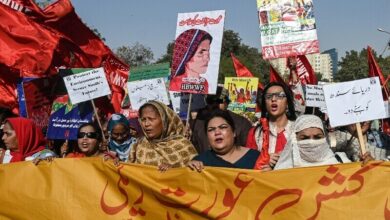
Women in this country often carry weights that should never have been placed on their shoulders. Their everyday reality is shaped by the structures of a patriarchy that insists on policing their existence instead of protecting it. In a system where even survival can feel uncertain, the words spoken in courtrooms and judgment halls matter — sometimes more than the justice they deliver.
Recently, remarks from a senior member of the judiciary revealed exactly why women feel so unsafe. Instead of focusing solely on the monstrous act of a young woman being kidnapped, murdered, and mutilated by a man obsessed with control, space in the verdict was spent musing over “elite live-in relationships.” That line alone captures the quiet cruelty embedded in the mindset that governs so many institutions. The public breathed a sigh of relief when the death sentence was upheld, but the unnecessary commentary left a stinging reminder: women are still judged before their killers.
This isn’t new. This country has seen laws, amendments, and constitutional tweaks crafted conveniently for those sitting at the top of the power structure. Meanwhile, the common citizen — the awam — continues fighting through poverty, exhaustion, and uncertainty. For women, that fight multiplies. Life is heavier, harsher, more unforgiving.
Amid this landscape, two letters written by young women stand out — not only for their pain but for their clarity and strength.
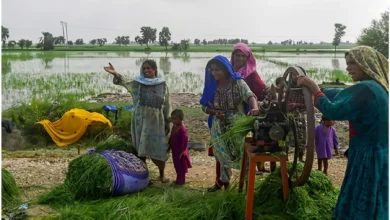
The first comes from a young Baloch woman who has fought her way through rigid traditions and generational barriers. She believed, like so many ambitious girls do, that education would be her pathway to freedom. But witnessing the country’s political and social decay has chipped away at her hope. She watches violence unfold from Gaza to Sudan, but the deepest cut comes from what happens in her own homeland. She writes of a heaviness she can’t shake, a fear that humanity has lost its way.
She apologises for her “rant,” yet her words are anything but. She writes with insight, courage, and emotional depth — a reminder of the brilliance our young women possess, even as they carry burdens they should never face. She clings to compassion because the world around her feels devoid of it. That alone speaks volumes about the times we live in.
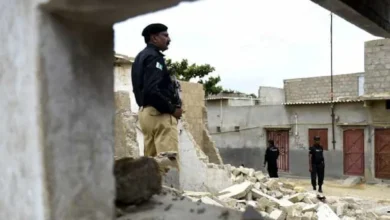
The second letter carries a different kind of despair — one shaped by the lived reality of being Hazara in Pakistan. This young woman recalls standing in the cold during the protests following the brutal killing of Hazara miners in 2021. Instead of sympathy, her community was accused of blackmailing the state. She questions leadership that abandons minorities for political convenience, and it is a question that should unsettle every conscience.
Despite being educated, despite contributing, despite being as Pakistani as anyone else, she experiences alienation even in basic tasks like attaining identification documents. Balochistan remains neglected in ways that cannot be justified. And she has reached the point where hope feels like a luxury she cannot afford. Her decision to consider leaving the country is not rooted in disloyalty — it is rooted in exhaustion.
These women write with sorrow, but also with a clarity that should force reflection. Their words reveal the cracks in our collective conscience. Their experiences expose the failures of a state that was meant to protect its people, not push them to the margins.
If there is any path forward — any chance at compassion, justice, or progress — it lies in listening to them. It lies in allowing women to lead, to shape policy, to occupy spaces where decisions are made. Because the voices we continue to silence are the very voices that understand the pain, resilience, and truth of this nation far better than those who sit in power.