UK Supreme Court Ruling Defines “Woman” and “Sex” as Biological Terms, Raising Concerns for Transgender Rights
The UK Supreme Court's landmark decision on the Equality Act 2010 has clarified the legal definition of "woman" and "sex," but has sparked concerns from transgender rights groups.

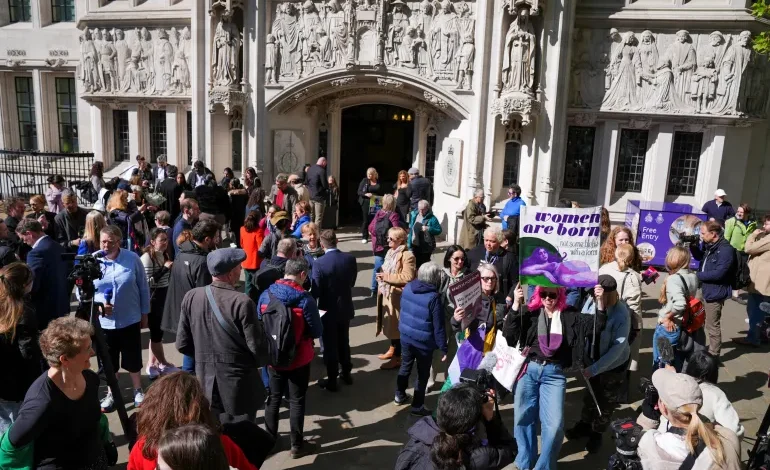
The United Kingdom’s highest court has issued a landmark ruling that the terms “woman” and “sex” under British equality laws refer to biological women and biological sex. This decision has sparked concern among transgender rights groups but has been welcomed by the UK government, which praised the ruling for providing clarity.
The case, decided on Wednesday, centred on whether a trans woman with a gender recognition certificate (GRC)—a legal document recognizing a person’s gender—was protected from discrimination under the Equality Act 2010. The Equality Act aims to safeguard individuals from discrimination based on characteristics such as sex, race, and religion.
The Supreme Court ruling has confirmed that single-sex services—such as refuges, hospital wards, and sports—can lawfully exclude trans women. The decision aims to clear up any legal ambiguity regarding the rights of trans women in these spaces. Critics, however, warn that the ruling could lead to increased discrimination, particularly in areas such as employment and services.
Patrick Hodge, Deputy President of the Supreme Court, explained the unanimous decision, stating, “The terms ‘woman’ and ‘sex’ in the Equality Act 2010 refer to a biological woman and biological sex.” However, he cautioned against interpreting the ruling as a victory for one group at the expense of another, emphasizing that the decision was meant to clarify legal rights without creating division.
The case was brought forward by the For Women Scotland (FWS) campaign group, which opposed guidance issued by the Scottish government in 2018 that stated a trans woman with a GRC should be legally considered a woman. While FWS lost its case in Scottish courts, the Supreme Court sided with their interpretation, providing a significant shift in legal precedent.
Susan Smith, co-director of FWS, celebrated the ruling, stating, “Women are protected by their biological sex, that sex is real, and that women can now feel safe that services and spaces designated for women are for women.” Her remarks were met with applause from supporters outside the court.
On the other hand, transgender rights organizations expressed concern over the ruling’s broader implications. Stonewall, a prominent LGBTQ+ rights group, voiced its apprehension, calling the decision “challenging” and warning about the potential harm it could cause to transgender people. Despite this, the court reaffirmed that transgender individuals, including both trans women and men, are still protected from discrimination or harassment under the Equality Act.
Ellie Gomersall, a trans woman and campaigner, described the ruling as “another attack on the rights of trans people to live our lives in peace,” underscoring the growing tension surrounding transgender rights in the UK and worldwide.
In response, the UK government clarified that single-sex spaces would continue to be protected under law, providing reassurance to those concerned about the ruling. NHS Fife, a Scottish health organisation, also noted the decision, indicating it would take time to understand its full legal implications.
Legal experts suggested that this ruling could trigger the need for urgent updates to equality laws to ensure adequate protection for transgender individuals in the face of evolving societal norms and legal interpretations.
As the legal landscape surrounding transgender rights continues to shift, the implications of this Supreme Court decision will undoubtedly remain a topic of intense debate and legal scrutiny in the years to come.