Supreme Court Halts PHC Ruling on Citizenship for Afghan Nationals
The Supreme Court suspends Peshawar High Court’s verdict allowing Afghan men married to Pakistani women eligibility for citizenship, citing legal concerns.

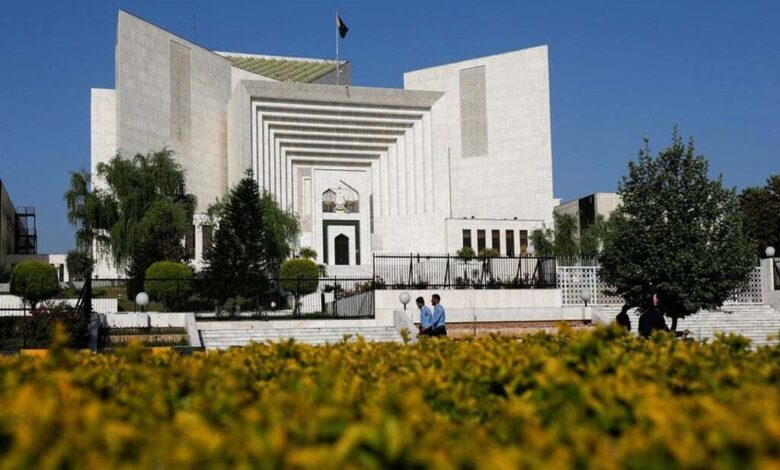
The Supreme Court of Pakistan has suspended a ruling issued by the Peshawar High Court that interpreted Afghan nationals married to Pakistani women as eligible for Pakistani citizenship. The decision came during a hearing led by a three-member bench comprising Justice Shahid Waheed, Justice Mussarat Hilali, and Justice Salahuddin Panhwar. The bench was hearing the federal government’s appeal against the PHC judgment, which had raised questions about nationality rights, identity documents, and the legal framework governing foreign residents in Pakistan.
During the hearing, Additional Attorney General Rana Asadullah informed the bench that the federal government had challenged the PHC order, delivered on December 1, 2023. He explained that the government’s main objection was not to the issuance of Pakistan Origin Cards (POCs) to Afghan nationals, but rather to specific paragraphs of the PHC verdict that implied citizenship entitlement through marriage to Pakistani women. He clarified that such an interpretation was not permissible under Pakistani law and could have wide-ranging implications.
The case also touched upon issues related to the issuance of Computerized National Identity Cards (CNICs), the cancellation of Proof of Registration (PoR) and Afghan Citizen Cards, and the legal status of refugees who have lived in Pakistan for decades. The Additional Attorney General noted that contempt petitions had been filed against authorities after the PHC ruling, reflecting the sensitivity and complexity of the matter.
Justice Mussarat Hilali questioned the legal basis for granting citizenship and asked how many such applications had been submitted so far. The government’s representative responded that 117 applications had already been received from Afghan nationals seeking citizenship based on their marriage to Pakistani women.
Nadra’s legal counsel informed the court that Afghan men married to Pakistani citizens would still require valid visas, emphasizing that legal entry into Pakistan remains a key condition for any application. Justice Hilali highlighted the importance of distinguishing between lawful and unlawful entry into the country, remarking that authorities “must see whether a person entered through the door or by jumping over the wall.”
Following the arguments, the Supreme Court issued notices to all relevant respondents and adjourned the case indefinitely, allowing time for detailed examination of the legal provisions under the Pakistan Citizenship Act and related regulations.
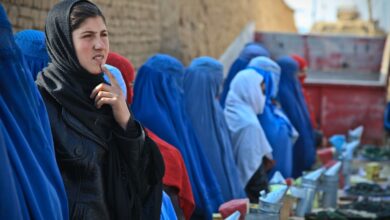
This case underscores a long-standing challenge for Pakistan — managing its relationship with Afghan refugees and long-term residents. Since the first major influx in 1979 following the Soviet invasion, millions of Afghan nationals have sought refuge in Pakistan. Subsequent waves in 1997 and 2001, driven by internal Afghan conflicts, further increased the refugee population, creating ongoing humanitarian and legal complexities.
While Pakistan has shown hospitality over decades, the question of citizenship and permanent settlement remains deeply contentious. The current suspension by the Supreme Court signals a cautious approach to balancing humanitarian concerns with the legal principles of nationality and state sovereignty. The final decision will likely have significant implications for refugee policy, immigration law, and the rights of mixed-nationality families living in Pakistan.