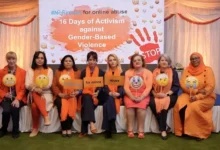
The theme of International Women’s Day 2020: Generation Equality


International Women’s Day is held on March 8th every year. The day is aimed to mark women’s contribution to the social, cultural, economic and political achievements of women. Another aim of the day is to campaigning for greater progress towards gender equality.
According to UN women report 2017, “Women are severely underrepresented at senior management and leadership levels. Only 4.2% of Fortune 500 companies had a female CEO in 2016. The report also made caution that the number of CEOs is declining instead of improving”.
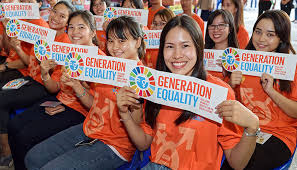
The theme for International Women’s Day for 2020 is, “I am Generation Equality: Realizing Women’s Rights“. The theme is aligned with UN Women’s new multigenerational campaign, Generation Equality, which marks the 25th anniversary of the “Beijing Declaration and Platforms for Action”. Adopted in 1995 at the Fourth World Conference on Women in Beijing, China, the Beijing Platform for Action is recognized as the most progressive roadmap for the empowerment of women and girls, everywhere.
The year 2020 is a pivotal year for advancing gender equality globally, as the global community takes stock of progress made for women’s rights since the adoption of the Beijing Platform for Action. It will also mark several other galvanizing moments in the gender equality movement: a five-year milestone towards achieving the Sustainable Development Goals; the 20th anniversary of UN Security Council resolution 1325 on women, peace and security; and the 10th anniversary of UN Women’s establishment.
The emerging global consensus is that despite some progress, real change has been agonizingly slow for the majority of women and girls in the world. Today, not a single country can claim to have achieved gender equality. Multiple obstacles remain unchanged in law and in culture. Women and girls continue to be undervalued; they work more and earn less and have fewer choices, and experience multiple forms of violence at home and in public spaces. Furthermore, there is a significant threat of rollback of hard-won feminist gains.
Pakistan and Women
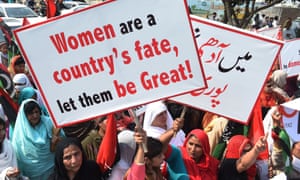
The status of women in Pakistan is not identical because of the interconnection of gender with other forms of exclusion in society. There is considerable diversity in the status of women across classes, regions, and the rural/urban divide due to uneven socioeconomic development and the impact of tribal, feudal, and capitalist social formations on women’s lives. However, women’s situation vis-à-vis men is one of systemic subordination, determined by the forces of patriarchy across classes, regions, and the rural/urban divide.
Gender is one of the organizing principles of Pakistani society. Patriarchal values embedded in local traditions and culture predetermine the social value of gender. An artificial divide between production and reproduction, created by the ideology of sexual division of labor, has placed women in reproductive roles as mothers and wives in the private arena of home and men in a productive role as breadwinners in the public arena.
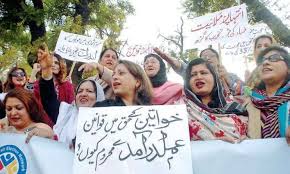
This has led Pakistan to a low level of resource investment in women by the family and the State. Thus, low investment in women’s human capital, compounded by the ideology of purdah (literally “veiled”), negative social biases, and cultural practices; the concept of honor linked with women’s sexuality; restrictions on women’s mobility; and the internalization of patriarchy by women themselves, becomes, the basis for gender discrimination and disparities in all spheres of life.
The critical link between literacy level and economic growth vis-à-vis other social sector indicators, is well proven both in terms of international and Asian experience.
Nevertheless, Pakistan continues to spend a meager amount of its resources, i.e., only 2.2 percent of its gross national product (GNP), on education. With this trend, Pakistan will not be able to allocate 4 percent of its GNP on education by 2000, as recommended by the United Nations Educational, Scientific and Cultural Organization for developing countries. The low health status of women is the result of women’s lower social, economic, and cultural standing.
Social and familial control over women’s sexuality, their economic dependence on men, and restrictions on their mobility determine differential access of males and females to health services.
Intrahousehold bias in food distribution leads to nutritional deficiencies among female children. Early marriages of girls, excessive childbearing, lack of control over their own bodies, and a high level of illiteracy adversely affect women’s health.
Institutionalized gender bias within the health service delivery system in terms of lack of female service providers, and neglect of women’s basic and reproductive health needs, intensify women’s disadvantaged health status.
It is estimated that two-thirds of the psychiatric patients at any hospital or clinic are women. Women’s poor mental and physical health has negative implications on their productivity and imposes high social and economic costs for society.
The rise of poverty exacerbates conditions of oppression for women and children. In poor households with scarce means, gender discrimination in the allocation of household resources is more pronounced.
Women suffer most from nutritional deprivation in low-income households.
On the other side, General Election was held in July 2018. These elections-2018 saw an increase of 3.8 million newly registered women voters. The dramatic increase follows a 2017 law requiring at least a 10 percent female voter turnout to legitimize each district’s count.
Pakistan has allowed women to vote since 1956, yet it ranks among the last in the world female election participation.