
The Evolving Abaya: From Traditional Cloak to Fashion Statement in Pakistan
From plain black to prints and pastels, abayas in Pakistan are being reimagined by young designers blending Gulf inspiration with local flair—reshaping modest fashion for the modern era.

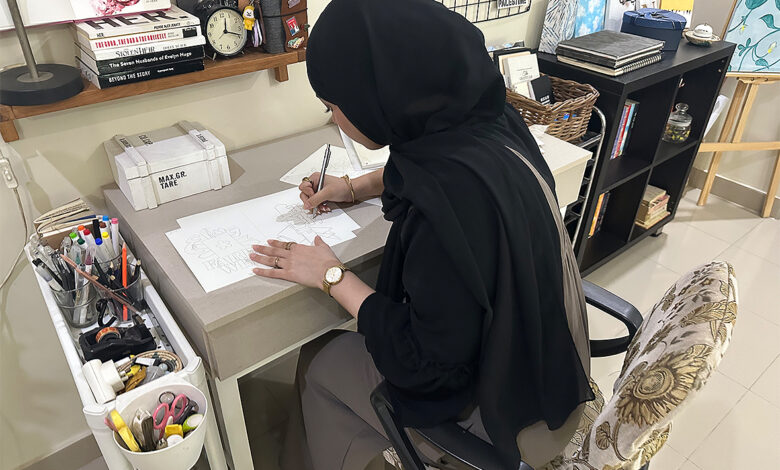
ISLAMABAD: In Pakistan, the abaya is undergoing a quiet revolution. Long considered a symbol of religious modesty, it’s now evolving into a dynamic fashion statement. Young Pakistani designers and wearers are reshaping the traditional black cloak into a canvas for cultural expression, trend awareness, and personal style—reflecting broader shifts across the Muslim world.
Once limited to plain black and simple cuts, today’s abaya in Pakistan is being transformed by colorful fabrics, elegant embellishments, and Gulf-inspired tailoring. This transformation is most visible among Pakistan’s urban youth and diaspora communities, where social media, migration, and Gulf fashion hubs have amplified influence.
Designer Nimra Saleem, who spent her early life in Saudi Arabia, is among those leading the shift. After returning to Pakistan and graduating in textile design, she began reimagining the abaya through a fresh lens. “The Gulf states introduce new designs and colors every year,” said Nimra. “My designs are inspired by Saudi styles but adapted to Pakistani weather and preferences.”
Her upcoming abaya line showcases georgette, silk, and lighter fabrics suited to Pakistan’s climate. Beyond comfort, her focus is also on variety: printed, pastel-colored, and embellished abayas paired with vibrant hijabs—far from the austere image once associated with the garment.
Abdul Rahman, a boutique owner in Rawalpindi, echoed the changing tastes. “Some women want casual wear, others want embroidered or party-wear abayas. Social media and Gulf fashion have reshaped everything.” His boutique, now receiving global orders from the UK, UAE, and South Africa, sells abayas ranging from Rs3,000 to Rs20,000—affordable yet fashionable modestwear for diaspora communities.
For many wearers, the abaya has shifted from being solely religious to being a blend of cultural heritage and individuality. Areeba Faisal, a university student, said, “People are starting to understand that modesty isn’t about wearing only black. It’s about how you carry yourself.” While she still prefers black abayas for daily wear, she enjoys exploring colorful and embroidered styles for special occasions.
Humaira Javeed, another student, prefers lighter tones and believes that fashion and faith can go hand-in-hand. “Clothing evolves with time,” she noted. “Wearing an abaya doesn’t mean you have to sacrifice self-expression. It can be modern, stylish, and still modest.”
This redefinition is part of a wider trend across Muslim societies. In Saudi Arabia and the UAE, where uniform black abayas were once required, the garment is now being designed in soft hues, intricate lace, and contemporary cuts. Pakistan, closely tied to the Gulf through migration and cultural exchange, is naturally absorbing these shifts.
What was once a uniform is now a spectrum. As Nimra Saleem puts it, “Girls expressing themselves through abayas inspired me to create pieces that prove modesty can be just as fashionable and trend-aware. You can be modest, and you can still be in trend.”