Glory GreenGlory Special Exclusive
No Need of New Fossils Fuel Projects


Tourism is one of the main source of income and revenue generation in many countries like United States, France and Spain and they earn millions of dollars through international tourists visiting their countries every year. In US tourists attractions sites are parks, museums, historical sites, hotels, recreation centers while in France most of the tourists visits International Heritage Sites declared by UNESCO, these sites include cities, beaches, resorts and French villages. Environmental factors such as favorable weather, romantic coastline, beaches and the 44 world heritage sites are significant factors that influence the arrival of international tourists in Spain.
Keeping in view the above developed countries having largest revenue generation through tourism give special attention to this sector while the most scenic and considered “Heaven on Earth” Kashmir is being ignored regarding promotion of tourism by the present and past governments.
The state of Azad Jammu and Kashmir (AJK) lies between longitude 73 o – 75 o and latitude 33 o – 36 o and comprises an area of 5,134 square miles (13,297 square kilometers). AJ&K falls within the Himalayan organic belt. As such, its topography is mainly hilly and mountainous characterized by deep ravines, rugged, and undulating terrain. The northern districts (Neelum, Muzaffarabad, Hattian, Bagh, Haveli, Poonch, and Sudhnoti) are generally mountainous while southern districts (Kotli, Mirpur, and Bhimber) are relatively plain. The mountain ecosystems are relatively unstable and have low inherent productivity. Within this fragile environment, however, there is a great variety of ecological niches upon which people base their livelihood. Small land holdings and scarcity of cultivable land are the main factors limiting on-farm income. The area is full of natural beauty with thick forests, fast flowing rivers and winding streams. Main rivers are Jhelum, Neelum and Poonch.
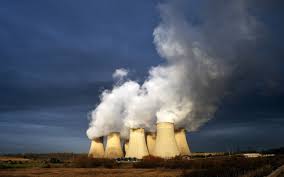
The region that can generate revenue through tourism have been ignored by the administrative government and many of fuel fossils projects are either in process or to be initiated before long where natural beauty of the scenic state have been and will be affected.
Water resources are the main heritage of this region, Neelum river originates from Indian held Kashmir and runs westwards along the Line of Control in Jammu and Kashmir. Its is fed by many glacial streams on its way and enters in Azad Kashmir in Gurez sector and flows until it meets Jehlum river in Muzaffarabad. This river is 245 kilometers long, it covers 50 kilometers in Jammu and Kashmir and the remaining 195 in Azad Kashmir.
In the recent past years , India constructed 330 megawatt Kishanganga Hydro electric Plant and it will divert almost 40 percent water of Neelum river through 24 kilometer tunnel dug through the mountains of Bandipore where it will join the Wular Lake and then Jehlum River.
Similarly, a 969 MW Neelum Jehlum Hydropower Project is about to complete in Azad Kashmir, although both projects collectively diverted almost 80 to 90 percent of the the total river water of Neelum in tunnels but it has been also observed that India also violated that Indus Waters Treaty in this regard.
The diversion of this water has affected the masses living in AJK especially in Muzaffarabad where almost 1 million people rely on the water of this river.
These projects have disturbed the whole environment and in result it has also affected the climate change where forests are decreasing rapidly and in addition of shortage of water and fueling these kind of projects has damaged the ecological environment.
Talking on Forests in AJK, about 42.6% of the total Geographical area (0.567 million hectares), is controlled by the Forests department. The per capital standing volume is 299.5 Cft and per capital forest area is 0.35 Acre, demand of wood is 1.65 million cubic meters annually and sustainable production is 1.94 million cubic meters according to the said department but the cutting of woods is on the move despite of prohibition and local administrative government is unable to control it. However, the local communities have traditional rights in terms of use of the forests and on an average three trees are burnt by one household every year for the fuel-wood requirements in the absence of alternate sources. Similarly, about 5 trees on average are required to construct a house for which the wood roofs have to be replaced after every 8-10 years.
In the past recent years, a department naming Azad Kashmir Logging and Sawmills Corporation (AKLASC) was established and operated by the government of AJK through AKLASC Board of Directors. It was responsible for the scientific harvesting of wood from Azad Kashmir natural forests and sells the wood in the form of logs, scants, planks, component form as well as other manufactured wood products and its harvesting was done by fuel fossils plants and products. The logging Operations were carried out through the local forest contractors and where required Cable cranes are also operated by AKLASC. It was one of the essential revenue generation department for the government of Azad Jammu & Kashmir from its forest resource. Few weeks ago, in a meeting chaired by Prime Minister AJK Raja Farooq Haider Khan, it was decided that immediate steps will be taken for the provision of golden shake hand to non-gazette and gazette employees, and the sale of asset sales besides gold shake hand will be processed within 3 months. These endeavors were done after the ban on deforestation internationally but it has already damaged the forests of AJK and still all those contractors who are earlier, as per contractors of AKLASC were harvesting forests are now involved in illegal deforestation.
Govt. of AJK has stopped fueling fossil projects regarding forests but still concrete steps are needed to be taken by the incumbent government for the protection of forests in AJK besides making water bodies for water storage to meet the need of water and healthy enviroment. As climate change have affected the region immensely and even in monsoon, people are praying for the rain which is alarming and cautions the stake holders to think precisely on the matters regarding climate change and its affects in the State.
Note: Special Thanks to Saqib Ali Haidri for assistance