
Mahrukh Zahir: Leading Change from the Stage to the Soil
From theatre to the classroom, Mrs. Mahrukh Zahir empowers young women in Pakistan’s tribal areas to fight climate injustice and gender-based violence.

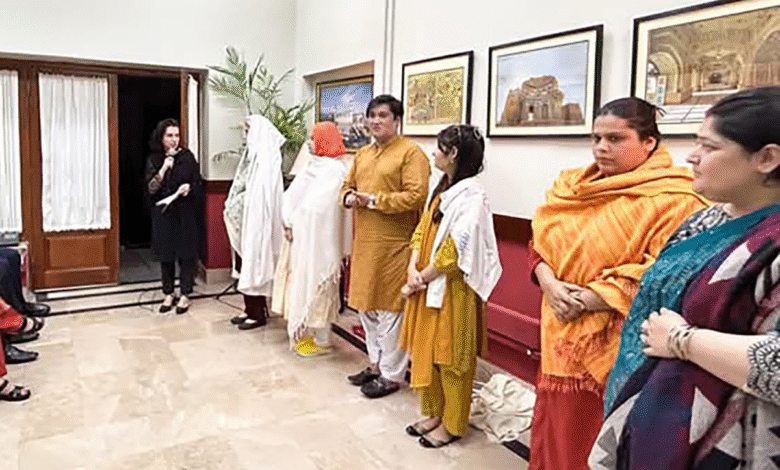
In the remote tribal belt of northwest Pakistan, a quiet but powerful movement is taking shape—led by voices that were once silenced. Among them is Mrs. Mahrukh Zahir, an alumna of the UNO’s Next Generation of Female Environmentalists project. She is a trailblazer transforming the conservative region of Khyber Pakhtunkhwa through climate activism, education, and art.
Mrs. Zahir is the first woman from her tribal district to serve as both an assistant professor and principal of a college. Her leadership isn’t just symbolic—it’s transformative. She blends science, sustainability, and storytelling to raise awareness around climate justice and gender equality in an area where women’s roles have traditionally been limited.
Her advocacy took on a creative dimension with her performance in the play The Unheard Scream, organized by theatre group Sheezay. As a certified theatre artist, she took the stage during the international 16 Days of Activism Against Gender-Based Violence campaign in Peshawar. The play was attended by U.S. Consulate General Shante Moore, gender studies experts, and students. Mrs. Zahir portrayed a Christian minority woman confronting the harsh realities of gender violence, identity struggles, and environmental decay. The emotionally charged narrative reflected real-life challenges faced by marginalized women across Pakistan.
But Mrs. Zahir’s mission didn’t stop at the stage. At Government Girls Degree College in Ekkaghund, she launched a “Generation Restoration” awareness campaign in support of the UN Decade on Ecosystem Restoration. This campaign brought together students and faculty in a hands-on learning experience that combined environmental science with practical action.
The program began in the science lab, where students watched a documentary on the global urgency for ecosystem restoration. Inspired by the discussion, they moved to the college’s botanical garden and took part in soil rehabilitation activities—learning by doing. For many of these young women, it was the first time they directly engaged in environmental work.
“Seeing my students actively take part in protecting the environment made me proud,” said Mrs. Zahir. “They’re no longer just students—they’re leaders and caretakers of our future.”
Through her work, Mrs. Zahir challenges both gender norms and environmental neglect. In a region where both nature and women have long been overlooked, she is nurturing resilience in both. Her efforts are not only creating climate-conscious citizens but also encouraging young women to rise as agents of change.
Mrs. Zahir’s leadership is grassroots, authentic, and deeply connected to her community. She brings environmental advocacy into classrooms, gives voice to silenced stories on stage, and transforms gardens into spaces of empowerment. Her journey proves that solutions rooted in community, creativity, and care are the most enduring.
As the world faces growing climate challenges, stories like Mrs. Zahir’s remind us that real change starts locally—with women leading the way, even in the most conservative corners of the globe.