Hindi Film ‘Mrs.’ Sparks Debate on Women’s Invisible Labour in Marriage
The Sanya Malhotra-starrer, a remake of ‘The Great Indian Kitchen,’ sheds light on patriarchal traditions and unpaid domestic labour, triggering a heated debate on gender roles in India.

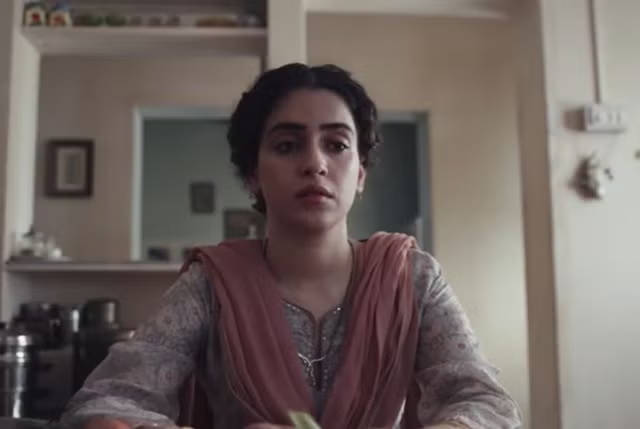
A Hindi-language film investigating the gendered division of work and patriarchal desires in marriage has started a across the country wrangle about in India. Mrs., featuring Sanya Malhotra, dives into the battles of a love bird lady exploring the burdens of unpaid household work in her husband’s home.
Directed by Arati Kadav, Mrs. could be a change of the 2021 fundamentally acclaimed Malayalam film The Awesome Indian Kitchen, which already highlighted the noiseless enduring of women caught in patriarchal home life. Whereas the initial film picked up acknowledgment, its affect was to a great extent constrained to Malayalam-speaking groups of onlookers. The Hindi redo, discharged on Zee5, has presently brought the discussion to a more extensive gathering of people, especially in northern India.
A Story of Inconspicuous Household Struggles
The film portrays the protagonist’s repetitive schedule of cooking, cleaning, and catering to wants of her spouse and in-laws, whereas her claim wants and yearnings stay unacknowledged. Her spouse, a gynecologist, rejects her fatigue, defending his claim battles by emphasizing his 12-hour work shifts failing to recognize that her work, in spite of the fact that unpaid, is similarly taxing.
The film starkly outlines how conventional gender parts depreciate residential work and normalize the abuse of ladies inside marriage. In a nation where over 470,000 residential savagery cases are pending in court, the film resounds profoundly with numerous ladies who have experienced comparative struggles.
Backlash and Allegations of Toxic Feminism
While Mrs. has been broadly acknowledged for its practical depiction of patriarchal abuse, it has moreover confronted critical backfire, especially from men. A few male watchers blamed the film of being too feminist and advancing anti-men propaganda. The Spare Indian Family Establishment, a men’s rights promotion bunch, claimed that women’s issues eclipse broader social issues, contending that 80% of approaches center on women’s assurance, clearing out millions of helpless individuals ignored.
On social media, faultfinders labeled the film outdated and contended that family chores ought to not be likened with abuse. One client expelled it as a film around a weak lady crying over cooking for two people. Others demanded that keeping up a domestic and cooking are not inalienably patriarchal and charged the producers of pushing a divisive narrative.
Filmmakers and Supporters Respond
Director Arati Kadav protected the film, dismissing claims of toxic feminism. She clarified that Mrs. does not portray men as lowlifess but or maybe as people unconscious of their privilege and the noiseless enduring of ladies. We’ve ended up so usual to treating ladies as functions instead of full, autonomous people that it has been normalized, she explained.
Supporters of the film contend that the backfire itself demonstrates the necessity of such discussions. Creator Rujuta Diwekar famous that numerous men are responding contrarily since they are seeing, maybe for the primary time, how profoundly baffled numerous ladies are. Creator Anjuli Rajprasad included, A motion picture comes along, and they uncover themselves openly.
A Step Towards Change
The film’s lead performing artist, Sanya Malhotra, communicated her trust that Mrs. would encourage exchange on sexual orientation parts. This story is so important. So numerous ladies have related to it, she told PTI.
Jeo Infant, the chief of the initial The Extraordinary Indian Kitchen, recognized that such wrangles about have continuously existed. Evenwhen my film was discharged, individuals in Kerala claimed it was anti-men. But what things is that these issues are discussed, he said.
Despite the discussion, Mrs. has succeeded in starting discussions that amplify past cinema, inciting contemplation on sexual orientation disparity, household work, and the changing part of ladies in Indian households.