Father Kills Daughter Over TikTok Use in Pakistan
In Rawalpindi, a 16-year-old girl was murdered by her father in an “honour” killing over her refusal to delete her TikTok account, exposing deep-rooted gender and digital divides.

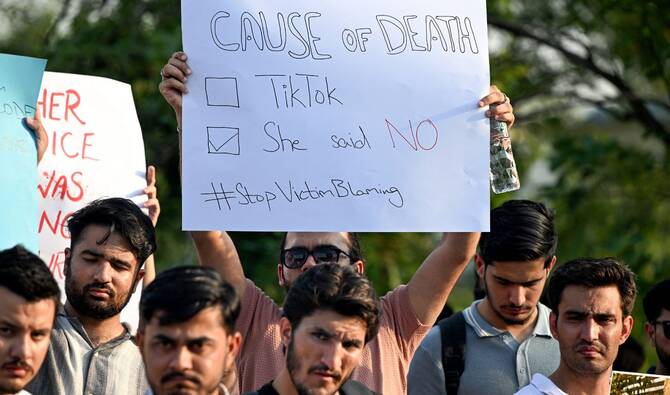
In a harrowing incident that underscores Pakistan’s persistent struggle with gender-based violence and digital freedom, police in Rawalpindi confirmed that a father fatally shot his 16-year-old daughter after she refused to delete her TikTok account.
The murder, reported on Tuesday and confirmed by authorities on Friday, was initially presented by the family as a suicide. However, police investigations revealed that the killing was committed for “honour,” a justification still tragically common in parts of the country.
In a nation where women’s public presence is tightly monitored — both offline and online — this act reflects the growing tension between traditional control and the expanding digital presence of young women.
“This was a clear case of an honour killing,” police officials stated. “The father was enraged that his daughter continued to use TikTok despite being told to stop. He believed her activity online was damaging to the family’s name.”
The suspect has been arrested and is now in police custody. Meanwhile, the teenage girl’s death has reignited urgent conversations about the safety of women online, cultural restrictions, and the deep-rooted patriarchal norms that still justify violence under the guise of family “honour.”
A Pattern of Violence
This is not an isolated case. Just last month, a 17-year-old TikTok influencer, Sana Yousaf, was murdered at her home by a man whose advances she had rejected. Sana, a rising digital star with over a million followers across social platforms, posted videos highlighting traditional clothing, beauty products, and café reviews — content that resonated with many Pakistani youth, especially girls from conservative households.
For many women like Sana, TikTok offered not just creative expression but also a source of independence and income. In a country where fewer than 25% of women participate in the formal workforce, such platforms provide rare visibility and financial opportunity. But with that opportunity comes exposure to backlash — both from individuals and institutions.
A Gendered Digital Divide
The Mobile Gender Gap Report 2025 reveals a staggering digital inequality in Pakistan: only 30% of women own a smartphone, compared to 58% of men — the widest gender gap in mobile phone ownership globally. This gap not only limits women’s access to digital tools and knowledge but also makes them more vulnerable to control and surveillance.
In this context, a young girl having her own TikTok account is more than a personal choice — it’s a form of digital defiance in a society where online presence can be equated to public shame.
Adding fuel to the fire are frequent statements from Pakistan’s telecommunications authorities threatening to ban or restrict TikTok, often citing “immoral content.” The platform has been banned multiple times over concerns ranging from LGBTQ visibility to sexual expression — further marginalizing women and minorities who use it to find community, income, and voice.
Tribal Traditions, Deadly Consequences
In rural and tribal regions, particularly in provinces like Balochistan and Khyber Pakhtunkhwa, social media activity by women is often viewed through a lens of strict patriarchal norms. Earlier this year, in Balochistan, a man confessed to orchestrating the killing of his 14-year-old daughter for sharing TikTok videos, claiming it brought “dishonour” to the family.
Such acts are often quietly condoned or inadequately prosecuted, allowing the cycle to continue. According to human rights groups, over 1,000 women are murdered each year in so-called honour killings in Pakistan — often by close family members.
Beyond Legal Reform: A Call for Cultural Shift
While laws against honour killings exist in Pakistan, enforcement remains weak. More importantly, experts argue, the solution requires more than just legal reform.
“This is not just about one app or one platform,” said a women’s rights advocate in Islamabad. “This is about control — over women’s bodies, voices, and choices. Unless we tackle the cultural mindset that sees women’s independence as shameful, tragedies like these will continue.”
Public awareness campaigns, digital literacy programs, and support for women in tech and media are critical steps. Moreover, providing young women with access to education, safe digital spaces, and legal protections is key to breaking these cycles of control and violence.
As Pakistan continues to wrestle with balancing traditional values and modern freedoms, the heartbreaking death of a teenage girl over a TikTok account is a stark reminder of how much work remains to be done.