
Gaza’s Healthcare Crisis Threatens Pregnant Women and Babies
Israel’s war and restrictions on humanitarian aid have put pregnant women and newborns in Gaza at life-threatening risk, with limited access to care and resources worsening the situation.

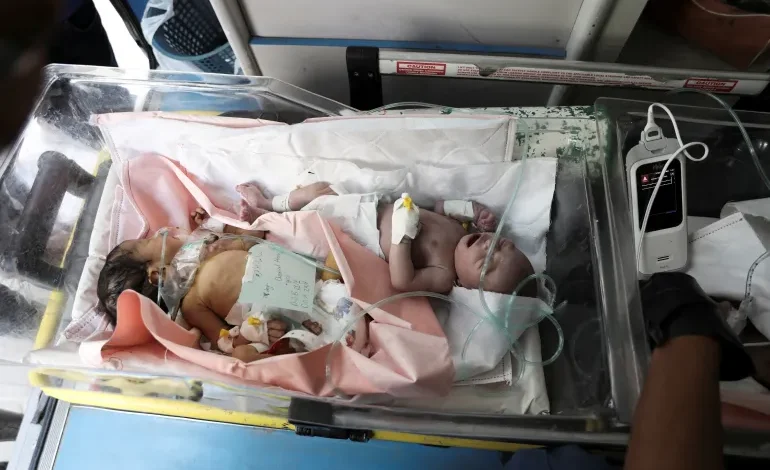
Human Rights Watch (HRW) has warned that the 15-month-long conflict between Israel and Gaza, combined with severe restrictions on humanitarian aid, has placed pregnant women and newborns in life-threatening danger. Despite the ongoing ceasefire, the conditions for women in Gaza giving birth are unlikely to improve, particularly with new Israeli laws set to take effect, severely restricting the delivery of essential aid.
The HRW report highlights the harsh conditions faced by women in Gaza, especially in hospitals overwhelmed by war casualties. Women have been forced to leave overcrowded hospitals just hours after childbirth, leaving them without proper recovery care. The shortage of incubators has also led to tragic outcomes for newborns. One doctor at the al-Helal al-Emirati Maternity Hospital in Rafah reported that due to a lack of incubators, multiple preterm babies were placed in one incubator, often leading to their deaths. With freezing temperatures and a lack of shelter, several babies have tragically died from hypothermia.
The HRW report also stresses that Israel, as the occupying power in Gaza, has violated the rights of pregnant women and newborns by denying them dignified care during pregnancy, childbirth, and the postpartum period. This includes a lack of proper maternal and newborn care in hospitals and the devastating impact of restrictions on aid organizations trying to deliver relief.
Adding to the crisis, two new pieces of legislation passed by the Israeli government will further exacerbate the situation. The laws, which take effect this week, bar the United Nations Relief and Works Agency for Palestine Refugees (UNRWA) from operating in Israel and occupied East Jerusalem. This makes it nearly impossible for the agency to obtain permits for staff or deliver humanitarian aid to Gaza. HRW’s Belkis Wille warned that these laws could make the conditions for pregnant women and newborns even worse, as they limit crucial medical aid.
Currently, only seven out of 18 hospitals in Gaza offer emergency obstetric and newborn care. The situation remains dire, with resources stretched thin, and many women and babies are left without essential care.
Despite the ceasefire, the coming weeks look bleak for those trying to survive in Gaza, as humanitarian aid becomes even harder to access. The need for immediate international support and policy changes has never been more urgent.