
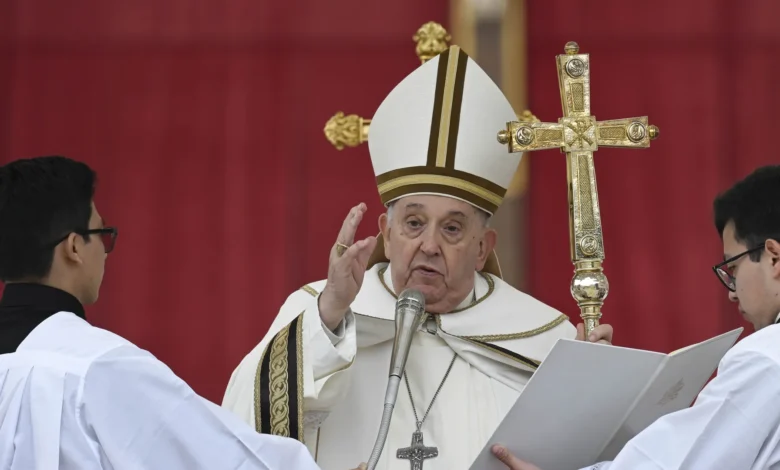
Pope Francis’s literary inclinations came to the fore on Sunday when the Vatican released a letter from the pontiff encouraging young priests to immerse themselves in reading. The pope emphasized the importance of literature in understanding human experiences and emotions, revealing his own fondness for the great tragedies.
In his July 17 letter to seminarians, published in eight languages, Francis posed a poignant question: “How can we speak to the hearts of men and women if we ignore, set aside or fail to appreciate the ‘stories’ by which they sought to express and lay bare the drama of their lived experience in novels and poems?”
The pope’s letter, enriched with references to literary giants like C.S. Lewis, Marcel Proust, T.S. Eliot, and fellow Argentinian Jorge Luis Borges, argued that reading is essential for personal maturity and should be a vital part of the formation of not just priests, but all Christians.
Highlighting the reading habits of Paul the Apostle, Francis championed the value of time spent with a good book, noting its ability to offer wholesome alternatives to other activities and to free minds trapped by obsessive thoughts.
“In moments of weariness, anger, disappointment or failure, when prayer itself does not help us find inner serenity, a good book can help us weather the storm until we find peace of mind,” wrote the 87-year-old pontiff.
Francis, who also enjoys jazz and soccer, has occasionally hinted at his literary preferences. He has expressed admiration for Dostoevsky and confessed to reading Italy’s seminal 1827 novel “The Betrothed” by Alessandro Manzoni multiple times, praising Manzoni as a champion of “victims and those who come in last.”
In a speech to the G7 about artificial intelligence, Francis cited Robert Hugh Benson’s 1907 dystopian novel “Lord of the World,” remarking, “It’s nice to read it, it’s interesting.”
In his letter, Francis emphasized that reading, which requires more personal engagement than watching films or television, enhances vocabulary, intellectual capacity, and reduces stress and anxiety. He lamented the fact that literature is often considered non-essential in the training of priests.
“We desperately need to counterbalance this inevitable temptation to a frenetic and uncritical lifestyle by stepping back, slowing down, taking time to look and listen. This can happen when a person simply stops to read a book,” wrote the pope.
Reflecting on his time teaching high school literature at a Jesuit school at the age of 28, Francis recalled the resistance he encountered from students who did not want to read certain selections. He argued that even challenging or boring texts have value and should be approached with “an open mind” and “a willingness to be surprised.”
“I, for my part, love the tragedians, because we can all embrace their works as our own, as expressions of our own personal drama,” he said. “In weeping for the fate of their characters, we are essentially weeping for ourselves, for our own emptiness, shortcomings, and loneliness.”
Francis concluded by highlighting the broader human perspective gained through literature. “Seeing life through the eyes of others through literature leads to greater perspective and greater humanity as readers step out of their own lives to enter that of others.”
He emphasized the hidden benefits of immersing oneself in the thoughts and fears of characters facing daunting challenges, suggesting that the insights gained from following a story to the end could prove helpful in one’s own life.