
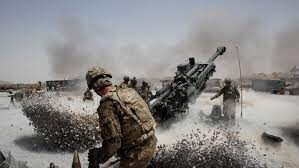
While the United States has officially declared an end to its military operations in Afghanistan, military operations will not really be terminated, but will transition to a new phase. The United States still retains vital interests in evacuating US citizens and coalition and Afghan allies, and in preventing additional terrorist attacks by al-Qaeda and others. Both of these objectives, as well as others, will require a lot more work (both diplomatic and military), a lot more time, and additional national resources. The United States also now has a lot of work to do to shore up its alliances in the wake of the poorly executed withdrawal. This, too, will require new efforts if the United States seeks to navigate this dangerous new era in a way that protects American security and prosperity.
Time for hard question why US policy fail? Nowthat the US military withdrawal from Afghanistan is finally complete, the American people have a right to ask why US policy there failed so catastrophically. And they deserve honest answers, even if that is uncomfortable for those responsible for crafting and implementing those policies. A thorough inquiry should begin by scrutinizing the statements of civilian leaders and US government officials who claimed that success was right around the corner, and who ignored and sometimes suppressed information that should have caused them to revisit US objectives. The brave men and women of the US military expended enormous effort, and endured unspeakable hardships, on a nearly twenty-year-long mission that many suspected at the time was not vital to US national security. These misgivings have tragically been proved correct. We owe it to them, and to future generations, to understand what went wrong, and commit as a nation to avoid these errors in the future.
The lesson to learn and not learn History confounds expectations, especially those made in the immediate aftermath of major events. Who believed in 1975 when the US withdrew from Saigon that years later, Vietnam would welcome the US vice president, seeking American support against a potentially aggressive China? Who expected that the results of American involvement in Iraq would look relatively better than in Afghanistan?
We don’t know how the withdrawal and debacle in Afghanistan will look in twenty years. Much depends on how the United States handles the immediate aftermath of its withdrawal: how it cares for those Afghans it got out and for those at risk it did not, how the US deals with the Taliban and whether the Taliban consolidates control over Afghanistan, how the US deals with the threat of international terrorism again taking root in Afghanistan.
Much also depends on what lessons the United States learns from the Afghanistan War. Good lessons should be those of operational realism: what is (and is not) achievable in a given situation, when to use military force and when not to, when to follow up with long-term presence and when not to.
But even wise lessons are easier to articulate than to apply. The US went into Afghanistan for good reasons and stayed for reasons that seem right at the time. Nobody in policymaking sets out to blow it.
There are bad lessons as well. After defeat in Vietnam, America’s adversaries believed, and many Americans agreed, that the country was overextended, too weak, and too weary for international leadership. Yet, America’s prosperity depends on a world that is prospering and on a world that is as secure, peaceful, and orderly as it can be. These principles steered American grand strategy for generations and, despite blunders, failures, and hypocrisies, American leadership produced much good.
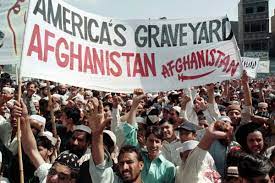
Our friends and allies don’t want America to retreat. They want us to get our act together.
President Biden can speak to America’s enduring purposes when he meets with an embattled American friend, Ukraine’s President VolodymyrZelenskyy, on September 1. Ukraine has its failings. But it’s defending itself and asks only for US help to do so. It’s shaken by the events in Afghanistan but still looks to America.
The post-Afghanistan period starts now. We can start it right—with humility over our failures, with confidence in our enduring principles, with determination to learn from mistakes but stand with our friends as we want them to stand with us.
The downfall of the Kabul government even before the full US military withdrawal from Afghanistan has raised concerns in many other countries, from Europe to East Asia, about America’s willingness to defend them. One key factor in the collapse was that the Afghan government’s own armed forces proved unwilling to defend the country. The Biden administration will undoubtedly argue that “Afghanistan was different,” and that what happened there won’t be repeated anywhere else.
But other governments might worry that the United States could pursue actions that demoralize their armed forces as occurred when the White House struck a deal with the Taliban without the participation of the Kabul government. The United States will need to expend considerable effort to make sure that similar negative dynamics don’t occur elsewhere.