Pakistan Launches First Shariah-Compliant Financing for Women
Khudmukhtar Khatoon empowers women entrepreneurs through digital, Shariah-compliant asset-based financing to promote inclusive and sustainable growth.

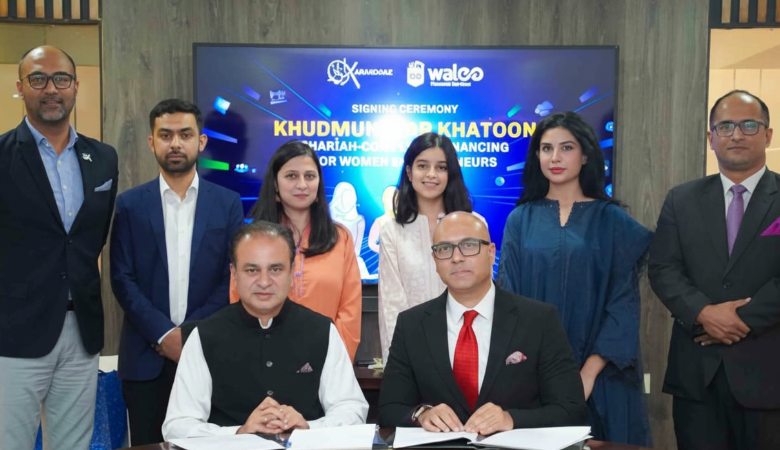
Pakistan has taken a groundbreaking step toward empowering women entrepreneurs with the launch of Khudmukhtar Khatoon, the country’s first Shariah-compliant digital asset-financing solution exclusively designed for women. The initiative, launched under a strategic partnership between Karandaaz Pakistan and Walee Financial Services, aims to transform women’s access to finance and foster inclusive economic participation.
The program directly tackles one of the most persistent barriers faced by women-led businesses in Pakistan — limited access to formal financing. Instead of providing cash loans, Khudmukhtar Khatoon focuses on asset-based financing, allowing women to acquire the physical resources necessary to launch or grow their ventures. This ensures that funding translates into productive outcomes, creating long-term business value rather than temporary liquidity.
To ensure that women from diverse backgrounds can participate, the program adopts a tier-based approach. Entrepreneurs are categorized into four levels based on factors such as business documentation, financial history, and operational experience. This system allows both informal and established women entrepreneurs to benefit from tailored financing solutions that match their stage of business development and potential for expansion.
In its initial phase, the program will focus on sectors where women already have a strong presence — including apparel and tailoring, food services, and beauty services. These industries have been identified for their scalability and potential to create employment opportunities for other women. The Minimum Viable Product (MVP) phase will act as a testing ground to evaluate demand, operational efficiency, and overall impact before the model is scaled nationwide.
During the signing ceremony, Waqas ul Hasan, CEO of Karandaaz Pakistan, emphasized that Khudmukhtar Khatoon aligns with national priorities and global goals for women’s financial inclusion. He noted that the initiative reflects the organization’s mission to create financial systems that empower women as active contributors to Pakistan’s economy. He added that by introducing Shariah-compliant and impact-driven financial products, the program ensures that women can access opportunities aligned with both their values and business aspirations.
Noshad Minhas, CEO and Co-Founder of Walee Financial Services, described Khudmukhtar Khatoon as a milestone in dignified empowerment. He said that the model is not just about financial inclusion but about providing women with dignity, independence, and opportunity. This initiative, he noted, has the potential to redefine how women access finance in Pakistan, setting a precedent for future gender-focused financial innovations.
Sharjeel Murtaza, Chief Digital Officer at Karandaaz Pakistan, further highlighted the importance of going beyond access to create meaningful financial inclusion. He stressed that the goal is not only to provide funding but also to build pathways that help women thrive as business leaders. The program aims to bridge systemic gaps in financing, capacity building, and digital access — empowering women to achieve their full potential in business and beyond.
The Khudmukhtar Khatoon pilot will serve as a proof of concept for the country’s first Shariah-compliant, women-focused asset-financing model. It will generate valuable data and insights on product design, operational performance, and women’s unique financial needs. Over time, this evidence-based approach will guide policy, helping scale and mainstream women-centered financial solutions across Pakistan.
By integrating Islamic finance principles, digital innovation, and gender inclusion, Khudmukhtar Khatoon marks a new chapter in Pakistan’s journey toward economic equality. It reflects a vision of an economy where women are not only participants but leaders driving sustainable growth and creating opportunities for future generations.