Margalla Hills Is Dying – Will We Stay Silent?
Islamabad’s crown jewel—the Margalla Hills—is under threat. This once lush, thriving forest is quietly vanishing under the grip of land encroachment, illegal construction, and unchecked deforestation. In just two years, grass-covered areas have dropped drastically, forest cover is declining, and barren land is rising fast.

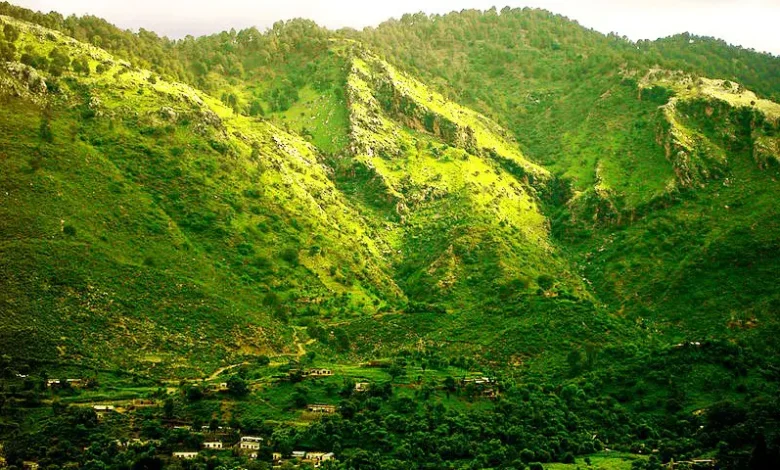
I am speaking about the beautiful and enchanting Margalla Hills of Islamabad, the city of greenery, beauty, which is now facing severe threats. Have you ever imagined what Islamabad would look like if the Margalla Hills were gone? Surely, none of you would ever entertain such a thought, not even in your dreams. All the unparalleled beauty of this extraordinary city, the city of beauty, stems from these Margalla Hills. Numerous trails have been created so that residents can enjoy moments of peace in nature while hiking and reveling in the lush charm of this forest, yet even those who spend hours on these trails have never considered that these Margalla Hills are on the brink of destruction.
My concern grew when I came across shocking details, and since then, I have been praying for the safety of Margalla Hills. But prayers alone won’t be enough—we need to change human habits and put a stop to the activities of the land mafia.
The alarming details are as follows, Changes have been observed in the usage and boundaries of Margalla Hills National Park. Over the past three years, from 2022 to 2024, there has been a decline in the grass-covered area of the park. Yes, the grass-covered area has decreased from 38.47% in 2022 to 31.90% in 2024. The water-covered area, which was 3.18% in 2022, shrank to 2.47% in 2023 and then slightly increased to 2.73% in 2024. Once, these trails had natural springs, but now they only appear occasionally in certain seasons sometimes not at all.
Let me share more changes in Margalla Hills: The barren land, which was 0.73% in 2022, has gradually increased, reaching 3.19% in 2024. Forests, which give Margalla its beauty, have also declined—though this might not be noticeable from a distance. The forested area was 50.11% in 2022, slightly increased to 50.16% in 2023, but then declined to 49.89% in 2024.
The area covered by buildings was 7.50% in 2022, decreased slightly to 7.23% in 2023, but then significantly rose to 11.66% in 2024.
These statistics reveal that blaming everything on climate change alone is not fair. The decline in forests is undoubtedly due to the unchecked activities of the land mafia, who operate without any accountability. If the destruction of Margalla Hills National Park continues at this rate and deforestation is not stopped, the increasing barren land will leave Islamabad vulnerable to climate change threats.
This city is already longing for rain, experiencing more hot days than cold ones, and suffering from polluted air. Who is responsible for all this?
I tried to get an answer from the Islamabad Wildlife Management Board, but I didn’t receive a satisfactory response. A board representative did confirm that the data is accurate but directed me to their media coordinator for further details. However, even after 24 hours, there was no clear response on who is truly responsible and why this is happening.
Margalla Hills National Park holds its national park status under Section 13 of the National Park Act 2024. It is home to three major types of forests:
1. Tropical Broadleaf Forests
2. Subtropical Evergreen Broadleaf Forests, where grass is prominent
3. Subtropical Pine Forests
This national park is a habitat for 38 species of mammals, 350 species of birds, 32 species of reptiles, and 9 species of amphibians that live both in water and on land.
If this national park continues to deteriorate and is eventually destroyed, what will happen to all these birds, animals, and mammals?
The decline in greenery is not just limited to Margalla Hills Islamabad’s green belts are also witnessing a noticeable reduction in lush trees. In recent times, a large number of trees have been cut down across the city.
According to the Institute of Architects Pakistan (IAP), 25,000 trees have been felled in Islamabad. The institute highlighted this issue in their letters and also wrote to Interior Minister Mohsin Naqvi, warning that the environmental crisis is worsening.
The IAP has urged urgent action, emphasizing that the ecological balance is deteriorating, and Islamabad’s green identity is under threat. The institute has advised Mohsin Naqvi to incorporate expert opinions in urban planning and has demanded that he take notice of the unchecked deforestation.
Along with their concerns, the IAP has also proposed alternative solutions, stressing the growth of native trees and improved traffic management as part of the response to Islamabad’s environmental challenges.
What will happen to Islamabad? What will happen to Margalla Hills?
Without these trees, greenery, and the Margalla Hills themselves, the area will become hollow and lifeless. Signs of Islamabad’s environmental destruction are becoming evident.
Expressing deep concern over these alarming facts, former Chairperson of the Islamabad Wildlife Management Board, Rina Saeed Khan, pointed out that both the eastern and western parts of Margalla Hills National Park are facing serious challenges. She highlighted that the number of villages in the area has increased to 32, creating further problems.
Rina Saeed emphasized the urgent need to expand the team and take measures to reduce the carbon footprint. She also mentioned that hiking activity on various trails of Margalla Hills is increasing, with Trail 5 being the most crowded. Due to excessive human presence, the number of birds visiting Trail 5 has declined.
She revealed that a proposal was made to close Trail 5 for one year to allow wildlife to recover, but it was not accepted.
Rina Saeed stressed that saving Margalla Hills National Park now requires a strong and effective management board.
Expressing concern and disappointment over the shrinking land of Margalla Hills National Park, Rina Saeed Khan warned that if barren land continues to increase and forests keep declining, the consequences will be severe.
– Wildlife populations will decrease.
– Islamabad’s air will become even more polluted.
– These forests are the lungs of Islamabad if they are damaged, air pollution will worsen and rainfall will decrease further.
– The expansion of concrete structures will drastically change Islamabad’s climate.
She stressed that the mountains are all we have left, and protecting them is crucial.
Rina Saeed also expressed regret over the rapid decline of trees in Islamabad, highlighting that indigenous species like Acacia (Kikar) and Chir Pine are being replaced by date palm trees, which are not suited to this environment.
She called this situation alarming, stating that the national park is already degraded and requires urgent attention.
She stressed that the mountains are all we have left, and protecting them is crucial.
There are many environmental laws, but no implementation. The question is: if not now, then when?
Will we continue to watch Islamabad’s destruction in silence? Now that Mushahid Malik has taken charge as the new Minister for Environment and Climate Change, perhaps there is some hope for action.
Many so-called environmental thinkers, who often praise sustainability, remain silent spectators on these issues. But paperwork alone won’t save the environment.
It’s time not only to protect the beauty of Islamabad and Margalla Hills but also to restore it. A healthy environment means a healthier life for all of us.
Keep me in your prayers.