The Hidden Danger: Understanding Fog, Smog, and Air Pollution in Punjab
Smog or Fog in Islamabad

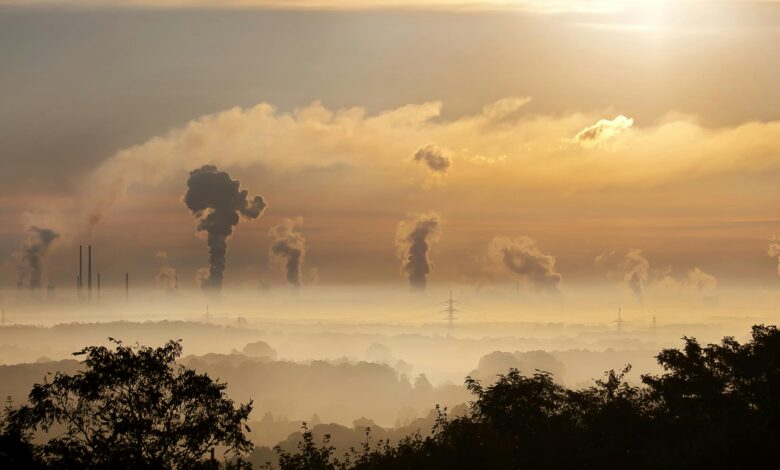
October has ended, but before leaving, it blurred everything around us. In Punjab, smog has enveloped several cities, including Lahore, where residents are deprived of sunlight even before the harsh cold arrives. The air pollution is so severe that breathing has become difficult. In every news bulletin, we hear reports of smog from Punjab. However, it was surprising when, one evening in Islamabad, I noticed a light haze under the setting sun. I thought it was my imagination, but a few days later, after completing a long 17-18 hour shift on the 26th constitutional amendment, I stepped outside at 6 am on Monday, October 21. The early morning scene was captivating, with Islamabad wrapped in a gentle mist, painting a beautiful story of charm. It had been a long time since I’d seen such morning scenes, so I was especially enjoying it. The morning was indeed beautiful, with a slight mist.
Vanishing Beauty and Pollution Concerns
Yet, during the day, when you approach Islamabad via the expressway, that beauty seems to vanish. The lush Margalla Hills fade away under dust and pollution. The attack of air pollution is so intense that these picturesque views disappear from sight, numbing the mind and making it feel like a weight is pressing on the lungs. Breathing becomes labored, and even the nose reacts with a buzzing sound. There’s a wave of concern, leaving us wondering—what exactly is going on?
Seeking Clarity: Smog or Fog?
To find an answer to “what exactly is going on,” I decided to reach out to various organizations. Is it clouds or smog? To get this answer, I visited the Environmental Protection Agency’s office, where Director of Interactor National Environmental Quality and Laboratories, Zaigham Abbas, spoke exclusively with 24 News. He said that what we are seeing these days in Islamabad is not smog but fog. It’s a type of mist, a weather condition where there’s a large number of tiny water droplets close to the ground, making visibility very low and causing difficulty in seeing. Fog typically forms when the air temperature is low, and moisture is high near the ground. Fog is mostly seen in winter because cold air allows water droplets to linger longer.
Understanding Smog and Its Health Impact
Smog, however, has different parameters. The term “smog” combines the words “smoke” and “fog.” It’s a state of air pollution formed by smoke, dust, industrial gases, vehicle emissions, and other pollutants. Smog is created by the combination of harmful gases in the air, such as nitrogen dioxide, sulfur dioxide, and ozone. Zaigham Abbas also mentioned that smog has serious health effects, increasing respiratory diseases, eye irritation, and heart conditions. Smog is more severe in cities during winter because the air becomes denser, and pollution stays close to the ground.
Rising PM 2.5 Levels and Health Warnings
Even after hearing about the differences between smog and fog, my concerns remained, as different research organizations reported dangerously high air pollution levels. However, the Pakistan Environmental Protection Agency was reluctant to confirm the data from private organizations that reported an unhealthy PM 2.5 level reaching 138.
What is PM 2.5?
Zaigham Abbas explained that it measures fine particles in the air with a diameter of 2.5 microns or smaller. These particles are so tiny that they can easily enter human lungs, posing health risks. PM 2.5 particles are usually emitted from vehicles, factories, coal burning, open fires, and other polluted sources. According to experts, when the PM 2.5 level reaches 138, it falls into the “unhealthy” category.
Air Quality Index (AQI) Levels
In Islamabad, the PM 2.5 level exceeding 100 is concerning, indicating a high concentration of fine particles in the air. Despite this, the Pakistan Environmental Protection Agency repeatedly responded to questions by insisting that it is “fog, not smog!”
- 0-50: Good
- 51-100: Moderate
- 101-150: Unhealthy for sensitive groups
- 151-200: Unhealthy
- 201-300: Very unhealthy
- Above 301: Hazardous
Therefore, a PM 2.5 level of 138 is harmful for sensitive individuals, and they should avoid spending extended time outdoors.
Steps to Control Pollution
Director Zaigham Abbas further stated that many steps are being taken to reduce air pollution in Islamabad. For instance, in collaboration with the Islamabad Traffic Police, vehicles are being monitored, and a Green Sticker will soon be introduced for vehicles. Only vehicles with the Green Sticker will be permitted on the road, acting as a license indicating that the vehicle does not pose an environmental threat. Meetings are being scheduled with all stakeholders regarding this initiative. He mentioned that after implementing it in the capital, they will recommend it to the provinces as well.
Health Effects of Air Pollution
What health issues can air pollution cause? Air pollution primarily affects the lungs. To get answers to my questions, I visited pulmonologist Dr. Jafar at Shifa International Hospital. In a special conversation with 24 News, he explained that smog has a strong impact on the lungs, largely due to moisture. If moisture persists, the chances of bacterial growth increase, leading to infections in the respiratory tract. Dr. Jafar added that the glands in the respiratory tract, of which there are many types, are greatly affected, particularly for allergy patients and those with asthma, whose symptoms can worsen. Conditions like asthma, flu, and pneumonia can become more prevalent.
Smog’s Effect on Heart Patients
Since almost every household has a heart patient these days, I wanted to learn about this risk. Dr. Jafar confirmed that smog indeed affects heart patients, especially those with diabetes, heart diseases, or other conditions that weaken immunity. He also mentioned that people over 65 may be particularly vulnerable and should take extra precautions.
Smog in Lahore and Punjab: Causes and Effects
Why is there so much smog in Lahore and other cities in Punjab? Dr. Jafar acknowledged that this is due to global warming. As global warming intensifies, so does air pollution. Dr. Jafar noted that these days, 60 to 70 percent of patients coming in are affected by air pollution, with the majority suffering from pneumonia, flu, and asthma.
Most Affected Groups: Children and the Elderly
Pulmonologist Dr. Jafar explained that young children and people over 65 are more affected. However, it’s incorrect to say that only men or only women are affected — both genders are equally impacted. Still, older adults should be extra cautious.
Essential Precautions Against Smog
Dr. Jafar suggested getting the flu shot vaccine between September and October. He also advised those prone to illness to avoid crowded places, stay indoors, wear warm clothing, keep their homes warm and dry, avoid bathing with cold water, refrain from drinking cold beverages, and avoid cold foods.
Masking Up: Protection from Smog
Dr. Jafar recommended that anyone can use a regular mask, especially those at higher risk. A simple surgical mask can be effective. He advised motorcyclists in smog-affected cities to wear masks, and if people experience eye irritation, they should consult a doctor and avoid going outside unnecessarily.
Awaiting Rain for Relief
Reducing air pollution or smog is only possible through rain. Many people ask me, “When will it rain? When will the weather change, and when will the clouds bring rain?”
To find answers, I visited the Meteorological Department. Director Zaheer Ahmad Babar, in an exclusive conversation with 24 News, explained that environmental changes are due to cloud conditions. Currently, there is no chance of rain, and this weather pattern is expected to continue for the next few days. He further noted that when toxic particles remain in the air, it leads to smog. Until we see substantial rainfall, smog or air pollution will not decrease. For the past while, conditions in the plains have been dry without rain, leaving pollution particles in the air.
The Need for Immediate Action
Zaheer Ahmad Babar mentioned that this smoggy situation will likely continue, especially in major cities, until mid-November. He said that without a strong western weather system bringing rain, it’s unlikely we will see a reduction in air pollution or smog. Concluding his remarks, Director Babar emphasized that climate change is a reality, with rising temperatures worldwide due to these changes. In the coming years, we will need to think about how to reduce emissions and protect our environment and society.
Alongside precautions, taking action against smog and fog is essential. With the pressing threats of climate change knocking constantly, if we don’t take action now, then when? The time to act is now—before it’s too late to turn the tide.